
What Is a Touch Screen Mirror and Which One Should You Buy?
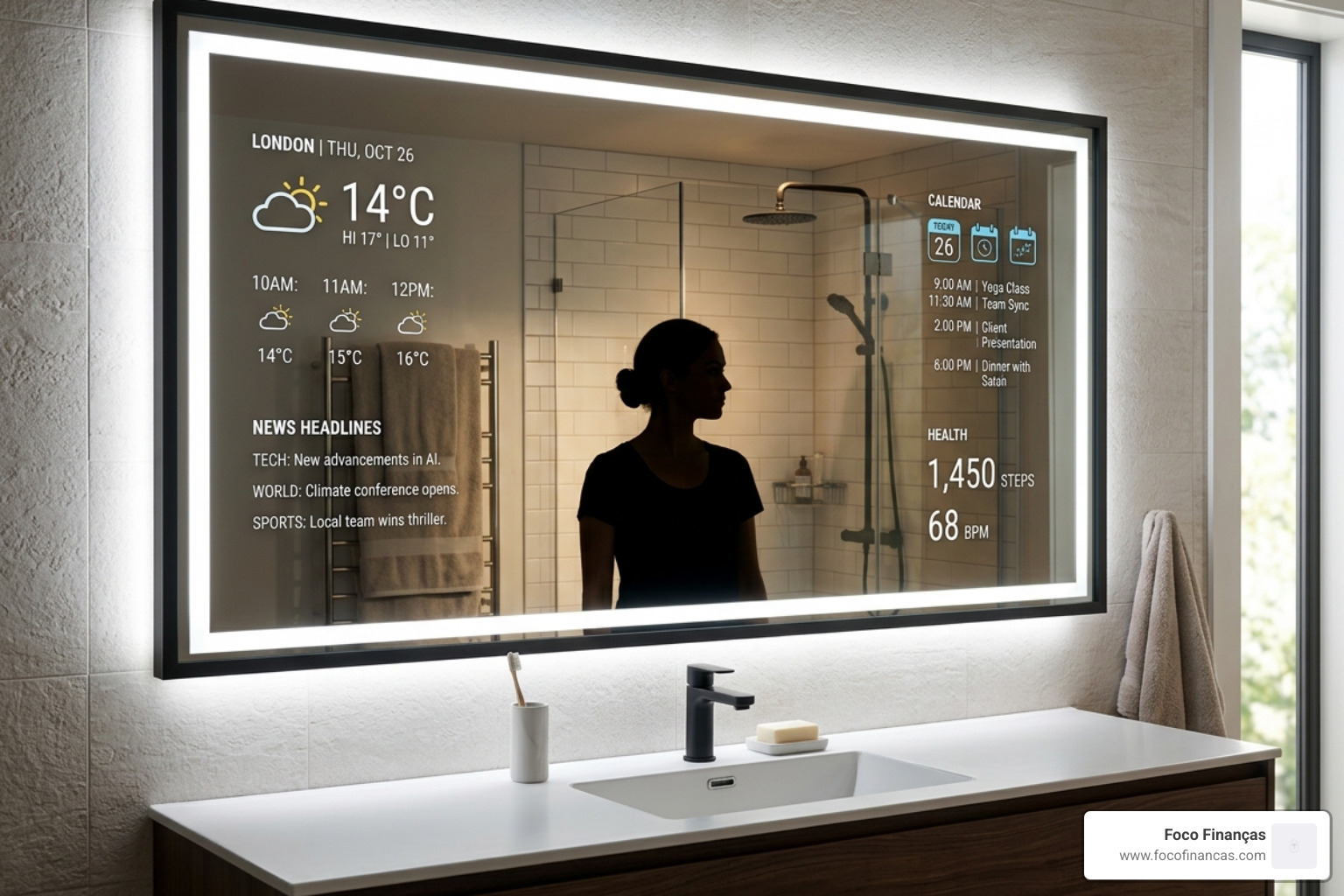
A touch screen mirror is exactly what it sounds like — a mirror that doubles as an interactive display you can tap, swipe, and control with your fingers. When switched off, it looks like a regular mirror. When switched on, it becomes a smart screen showing apps, news, weather, video, and more.
Here are the top touch screen mirrors worth considering:
| Mirror | Best For | Key Feature | Price Range |
|---|---|---|---|
| Haocrown 32×24″ Smart Vanity Mirror | Bathroom/makeup | Built-in 21.5″ touchscreen TV + LED | ~$999 |
| Homary Smart Mirror | Luxury bathroom | TV, Android, WiFi, Bluetooth | ~$1,470 |
| Displaylite Reflect | Commercial use | 12-point PCAP touch, 24/7 operation | Custom quote |
| Sinotectronics 55″ Mirror TV | Hotels/showrooms | 4K UHD, 10 touch points | Custom quote |
| Pro Display Interactive Mirror | Retail/events | 32″–98″ sizes, plug-and-play | Custom quote |
These mirrors range from affordable LED vanity mirrors with basic touch controls all the way to full Android smart mirrors with WiFi, Bluetooth, streaming apps, and health monitoring.
The technology has matured fast. Home Depot alone lists nearly 1,800 touch sensor bathroom mirrors, and premium smart mirrors now run on Android 11 with quad-core processors, 4K resolution, and IP65 waterproofing for wet environments.
Whether you want to upgrade your bathroom, build a DIY smart mirror, or outfit a retail space, this guide breaks down everything you need to know before buying.
Key terms for touch screen mirror:
Understanding the Technology Behind Interactive Mirrors
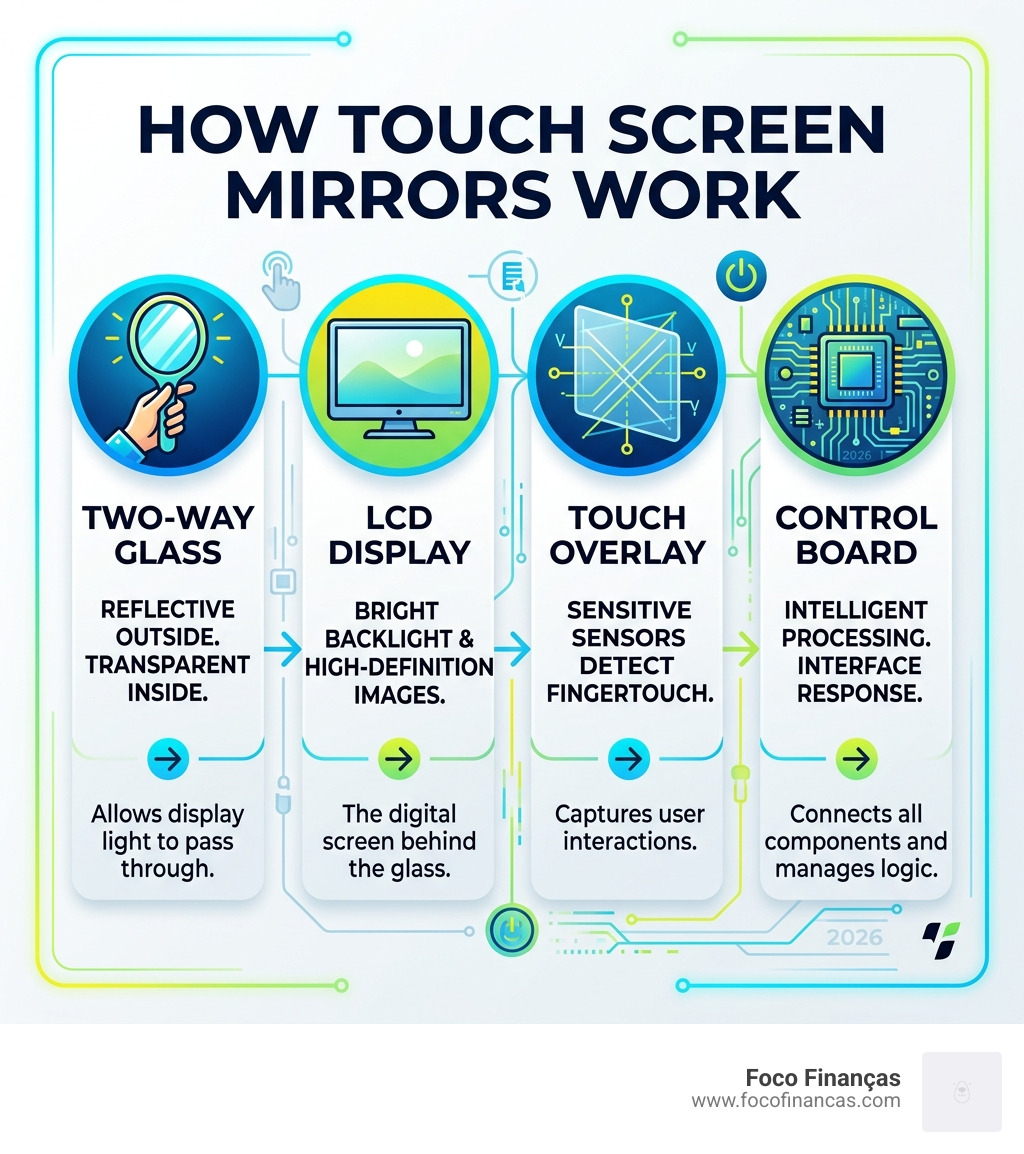
To the untrained eye, a touch screen mirror looks like a piece of high-tech sorcery. However, the secret lies in the clever layering of several components. At its core, an interactive mirror is a “sandwich” consisting of a professional-grade LCD or LED display, a touch-sensitive layer, and a specialized piece of glass known as a two-way mirror or “magic mirror.”
Mirrorvision and Two-Way Glass
The most critical component is the glass. Unlike a standard household mirror that has a thick silver backing to reflect 100% of light, smart mirrors use “vanishing glass” or Mirrorvision technology. This glass is semi-transparent. When the display behind the glass is turned off, the surface acts as a standard reflective mirror. When the display is powered on, the light from the screen passes through the glass, making the interface visible to the user.
Capacitive vs. IR Touch
How does the mirror know where you are pointing? Most high-end models, such as the 15.6 Digital Smart & Interactive Touch Screen Mirror Monitor – FT156V40MIRROR, utilize Projected Capacitive (PCAP) touch technology. This is the same tech found in your smartphone. It is incredibly responsive and supports multi-touch gestures.
For larger installations, some manufacturers use Infrared (IR) touch frames. These frames emit a grid of invisible light across the surface; when your finger breaks that grid, the system registers a “click.” If you are interested in the assembly process, we have detailed guides on creating-a-touch-screen-smart-mirror to help you understand how these layers bond together.
Plug-and-Play Integration
Modern interactive mirrors are designed to be user-friendly. Most use an HID USB connection for the touch layer, meaning they are “plug-and-play.” You can connect the mirror to a PC or media player via HDMI for the video and USB for the touch functionality, and it will work instantly without the need for complex driver installations.
Key Features and Smart Integrations
When we look at the features that define a high-quality touch screen mirror, it’s not just about the screen. It’s about how the mirror functions in its environment.
- LED Lighting: Most vanity-style mirrors include side-illuminated or backlit LED strips. These are often dimmable and offer different color temperatures (warm, neutral, cool) to help with makeup application.
- Anti-Fog Capabilities: High-end bathroom models feature integrated demister pads. These heating elements prevent the mirror from fogging up during a hot shower, ensuring your touch screen mirror remains usable at all times.
- Multi-Touch Interactivity: Advanced models allow for more than just a single tap. By learning how-to-add-multi-touch-interactivity-to-your-smart-mirror, you can enable gestures like pinching to zoom or two-finger scrolling.
- Professional Specs: Devices like the Displaylite Reflect Mirror Touchscreen are built for 24/7 commercial operation. They feature 1080p or 4K resolution, high brightness levels (measured in nits) to overcome ambient light, and even integrated cooling fans to prevent overheating during constant use.
Smart Connectivity and Android OS
The “brain” of the mirror is usually an integrated Android operating system. This allows the mirror to function as a standalone tablet. With WiFi 5.0 and Bluetooth 5.0 connectivity, these mirrors can sync with your smart home ecosystem.
- App Integration: You can download apps directly onto the mirror. Imagine watching YouTube makeup tutorials on your mirror while you follow along, or checking your Spotify playlist while brushing your teeth.
- Voice Control: Many mirrors feature built-in microphones for voice commands, allowing you to ask for the weather or news hands-free.
- Health and Wellness: Some 2025 models are even pushing into health monitoring. By using a make-your-smart-mirror-more-interactive-with-a-touch-frame, developers can integrate skin analyzers or sync the mirror with Bluetooth scales and fitness trackers to display your health data during your morning routine.
Popular Applications for Smart Mirrors
While the bathroom is the most common place to find a touch screen mirror, the applications extend far beyond the home.
Retail and Fashion
In the retail world, “Magic Mirrors” are changing the shopping experience. Customers in fitting rooms can use the touch interface to request a different size from a sales associate, browse related accessories, or even change the virtual lighting in the room to see how an outfit looks at “sunset” versus “office fluorescent.”
Hospitality and Hotels
Luxury hotels are increasingly installing devices like the 55 Inch Touch Sensor Glass Mirror TV With Display LCD Module. These massive displays act as a standard mirror for guests but can be activated to show hotel services, local weather, or act as a high-definition television. It’s a space-saving solution that adds a significant “wow” factor to any suite.
Professional and Commercial Spaces
You will also find these mirrors in:
- Beauty Salons: To show clients 360-degree views of their hair or to book future appointments.
- Exhibition Showrooms: Using a make-your-smart-mirror-more-interactive-with-a-touch-frame-2 to create interactive information kiosks that blend into the decor.
- Digital Signage: In high-end car showrooms or corporate lobbies where aesthetics are as important as information.
Multi-Touch Points and Sensitivity
Sensitivity is what separates a budget mirror from a premium one. A standard 32″ Smart Mirror Touch Screen might support 10-point touch, while commercial models can go up to 12 or even 20 points. This allows for:
- Gesture Control: Swiping, rotating, and flicking through content.
- Multi-User Input: Two people interacting with the screen at the same time (great for retail or museum exhibits).
- Versatile Input: High-quality PCAP screens support input from fingers, styluses, and even gloved hands—perfect for medical or industrial environments.
Buyer’s Guide: Choosing the Right Touch Screen Mirror
Buying a touch screen mirror is a significant investment. To help you choose, we’ve broken down the key factors you should consider.
Size and Resolution
Size matters, but so does the size of the internal screen. For example, a mirror might be 32 inches wide, but the actual touch screen display inside might only be 21.5 inches.
- Vanity Mirrors: Usually 24″ to 36″.
- Full-Length/Commercial: 40″ to 98″.
- Resolution: Look for at least Full HD (1920×1080). Larger mirrors (55″+) benefit significantly from 4K UHD resolution.
Brightness and Reflectivity
Because the light has to pass through a semi-transparent mirror, these screens need to be brighter than your average TV. Look for a brightness rating of at least 500–800 nits. This ensures the screen remains visible even in a brightly lit bathroom or showroom.
Installation Types
How do you plan to mount it?
- Wall Mount: Most common, often using a VESA pattern (like a TV).
- Recessed Mount: The mirror sits flush with the wall for a seamless look.
- Tabletop: Common for smaller makeup vanity mirrors.
Comparison Table: Mirror Types
| Feature | LED Vanity Mirror | Smart Interactive Mirror |
|---|---|---|
| Primary Use | Grooming & Makeup | Information & Entertainment |
| Touch Tech | Simple On/Off/Dim | Full Multi-touch OS |
| Connectivity | None or Bluetooth Audio | WiFi, Bluetooth, Apps, Voice |
| Price | $150 – $500 | $800 – $3,000+ |
| Example | TOOLKISS LED Series | Touch Screen Smart Mirror |
Price Factors
Why the huge price gap? You are paying for:
- The Processor: Faster CPUs (like Rockchip or Quad-Core A17) mean smoother app performance.
- Storage: More RAM (4GB+) and Flash storage (32GB+) allow for more apps and faster loading.
- Glass Quality: High-grade “diamond nano-coated” glass offers better clarity and scratch resistance (look for 6H hardness).
- Brand and Warranty: Premium models like the Haocrown 32×24 inch Smart Vanity Mirror often include 12-month warranties and better customer support.
Frequently Asked Questions
How to clean and maintain a touch screen mirror?
Cleaning a touch screen mirror requires a bit more care than a standard mirror. Because of the electronic touch layer and the specialized coatings, you should avoid abrasive chemicals or ammonia-based cleaners (like standard Windex).
- The Gold Rule: Use a dry or slightly damp microfiber cloth.
- Cleaning Solutions: If necessary, use a specialized non-conductive screen cleaner.
- Durability: Most quality mirrors have a surface hardness of 6H, meaning they are resistant to minor scratches from fingernails or jewelry, but you should still be gentle.
Can I install a touch screen mirror in a bathroom?
Yes, but you must check the IP rating. An IP65 rating is the gold standard for bathrooms, as it means the device is protected against water splashes and dust. Additionally, ensure the mirror uses a safe DC 12V or 24V power supply rather than high-voltage AC directly to the unit. Always look for models with built-in anti-fog demister pads if you plan to use it near a shower.
Do these mirrors require special software to operate?
Most consumer-grade smart mirrors come with Android OS pre-installed, making them as easy to use as a tablet. However, commercial units are often OS-agnostic. They support Windows, Linux, and even Raspberry Pi. Thanks to the plug-and-play USB HID interface, the mirror simply acts as a giant mouse for whatever computer you plug into it.
Conclusion
The touch screen mirror is no longer a futuristic concept reserved for sci-fi movies. It is a practical, aesthetic, and highly functional tool that is becoming a staple in modern smart homes and retail environments. Whether you are looking for a simple LED-lit vanity to perfect your morning routine or a massive 4K interactive display for your business, there is a solution that fits your needs.
At Foco Finanças, we believe that integrating smart technology into your daily life should be seamless and stylish. As the technology continues to evolve—bringing us closer to fully integrated health monitoring and even more immersive retail experiences—the smart mirror stands at the forefront of that revolution.
Ready to dive deeper into smart home tech? Explore more hardware solutions and discover how the latest innovations can transform your space.
