
What Is a Touch Screen Wall Mirror (And Why Should You Care)?
A touch screen wall mirror is exactly what it sounds like — a wall-mounted mirror that doubles as an interactive display you can tap, swipe, and control with your fingers.
Here’s a quick breakdown of what you need to know:
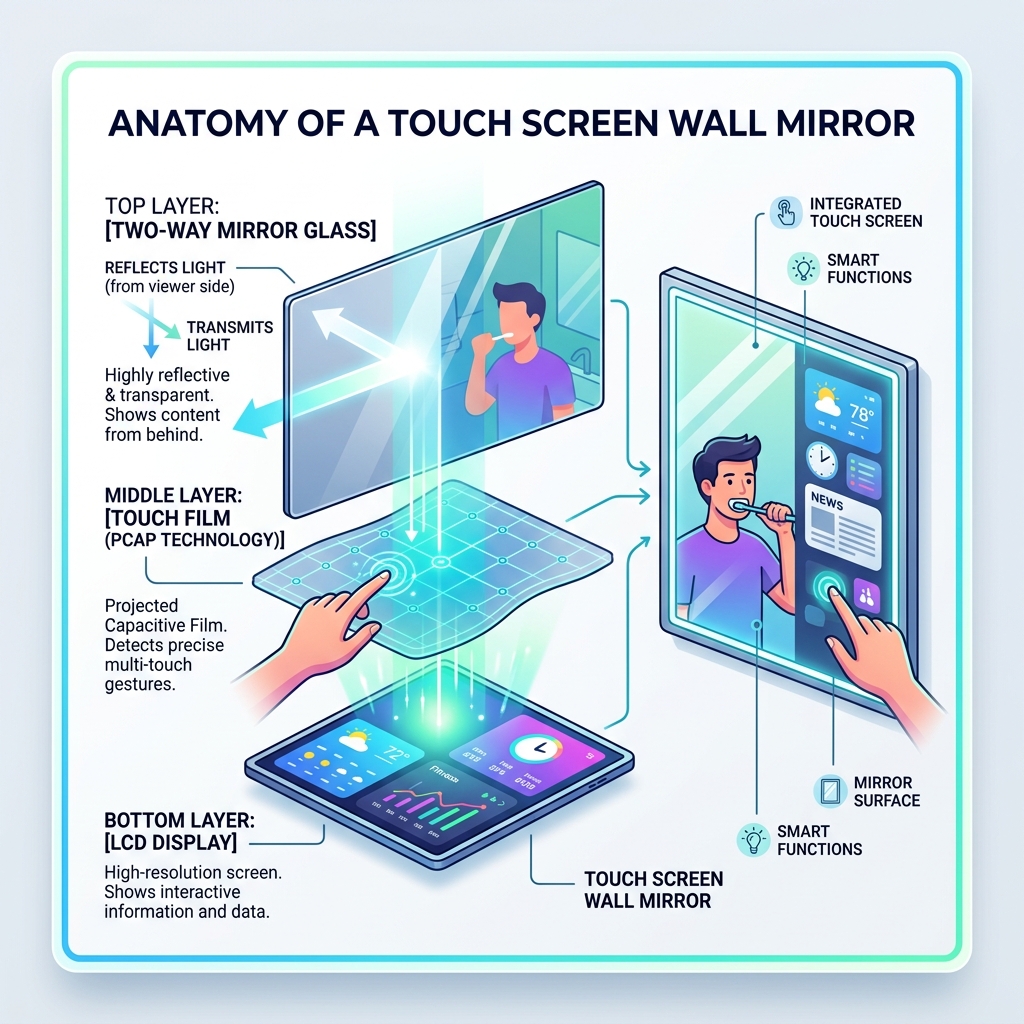
- What it is: A two-way mirror glass layered over an LCD screen with touch technology built in
- How it works: When the screen is off, it looks like a normal mirror. When it’s on, content shows through the glass
- Touch types: Most use PCAP (Projected Capacitive) or infrared touch overlays
- Sizes available: Typically 32 inches up to 98 inches
- Common uses: Smart home hubs, bathroom vanities, home fitness, retail displays
- Plug-and-play? Many models connect via HDMI and USB — no special software needed
- Price range: From a few hundred dollars to well over $1,000 for commercial-grade units
Walk into most homes today and you’ll still find the same passive, reflective mirror that’s been on walls for decades. It shows you your face. That’s it.
But that’s quietly changing.
Smart mirrors are showing up in luxury bathrooms, retail fitting rooms, and home gyms — and the technology behind them has become much more accessible. Whether you want to check the weather while brushing your teeth or follow a workout without pulling out your phone, a touch screen wall mirror can do that.
The best part? You don’t need to be an engineer to set one up.
This guide breaks down everything — how the technology works, what specs actually matter, what things cost, and how to avoid the common mistakes that make installations a headache.
Understanding the Technology: What is a Touch Screen Wall Mirror?
At its core, a touch screen wall mirror is a master of disguise. It utilizes “magic glass”—a specialized two-way mirror glass that is reflective on one side and transparent on the other. This allows an LCD or LED display mounted behind the glass to shine through when active, while appearing as a standard mirror when the screen is dark.
To make this “magic” interactive, manufacturers integrate a touch-sensitive layer. The most common high-end version is PCAP (Projected Capacitive) technology, which is the same tech used in your smartphone. It’s incredibly responsive and supports multi-touch gestures. For those interested in the build process, creating a touch screen smart mirror involves aligning these layers perfectly so the touch sensitivity remains accurate through the glass.
Many of these devices are essentially an Interactive Smart Mirror with Touch Screen designed for 24/7 use, meaning they are built with commercial-grade components that can handle being left on for extended periods.
How the Hardware Works
The hardware “sandwich” consists of the glass, the touch sensor, and the display panel. Some mirrors use an infrared touch frame that sits on the outer edge of the glass, emitting invisible light beams to detect where your finger breaks the plane. However, for a sleeker look, many people prefer internal capacitive sensors.
If you are looking to upgrade a basic smart mirror, you can make your smart mirror more interactive with a touch frame, which is an affordable way to add “tap-ability” to a DIY project. The infrared sensors in these frames are highly reliable and don’t require direct contact with the actual LCD, protecting the screen from pressure.
Is a touch screen wall mirror Plug-and-Play?
One of the biggest misconceptions is that you need to be a software developer to use one. In reality, most modern units like the Displaylite Reflect Mirror Touchscreen are designed for easy setup.
They typically function as a “Human Interface Device” (HID). This means when you plug the mirror into a computer or media player via HDMI (for the picture) and USB (for the touch), your finger acts exactly like a mouse. No special drivers or complex coding are required. Most are compatible with Windows, Android, and Linux right out of the box.
Key Features and Technical Specifications to Consider
When shopping for a touch screen wall mirror, the spec sheet can look a bit intimidating. However, focusing on a few key areas will ensure you don’t end up with a blurry or dim reflection.

First, let’s talk about the display. Unveiling the best screens for your smart mirror reveals that brightness is king. Because the mirror glass absorbs some of the light, you need a high-nit (brightness) display—usually at least 300 to 500 cd/m²—to ensure the interface is visible in a well-lit room.
| Feature | Android OS | Windows OS | Linux/Raspberry Pi |
|---|---|---|---|
| Best For | App-heavy use (Spotify, Weather) | Business/Commercial Power | DIY & Custom Coding |
| Ease of Use | Very High | High | Moderate |
| App Support | Google Play Store | Full Desktop Apps | Open Source Community |
| Stability | Excellent for single apps | Great for multitasking | High customization |
Choosing the Right touch screen wall mirror Size
Size matters, but bigger isn’t always better for every room. Standard interactive mirrors range from compact 15.6-inch models to massive 98-inch commercial displays. A 32″ smart mirror touch screen is often considered the “sweet spot” for home use—it’s large enough to provide a clear interface for fitness or news but small enough to fit in a standard bathroom or hallway.
Integrated Functionalities
The best mirrors offer more than just a screen. Look for features like:
- LED Lighting: Dimmable “daylight” LEDs are essential for makeup application.
- Anti-Fog Technology: A heating pad behind the glass prevents the mirror from steaming up after a hot shower.
- Bluetooth Speakers: Integrated 2.1 audio systems allow you to stream music or follow workout instructions clearly.
- Camera/Sensors: Some units, like the 15.6 Digital Smart & Interactive Touch Screen Mirror Monitor, include built-in cameras for video calls or motion sensors that wake the screen when you walk into the room.
Primary Applications for Your touch screen wall mirror
Where exactly do you put one of these things? The applications are broader than you might think, spanning from the master bathroom to the local retail mall.
A popular trend is the “fitness mirror.” Products like the MiraBoard transform from a decorative mirror into a personal trainer. You can watch a yoga instructor on the screen while simultaneously seeing your own form in the reflection to correct your posture. If you’re handy, learning how to build and install a wall mounted smart mirror can save you thousands compared to high-end fitness brand subscriptions.
Residential Use Cases
In the home, a touch screen wall mirror acts as the ultimate smart home hub.
- The Morning Routine: Check your calendar, traffic reports, and the news while you brush your teeth.
- Beauty & Grooming: Follow 4K makeup tutorials right on the vanity mirror.
- Entertainment: Watch Netflix or YouTube while soaking in the tub.
For the DIY crowd, a DIY smart mirror guide can help you integrate these features into your existing home automation system using a Raspberry Pi or an old Android tablet.
Commercial and Retail Benefits
Businesses are using this tech to “wow” customers. In retail, a multi-touch smart mirror allows shoppers to browse different colors of the shirt they are currently trying on without leaving the fitting room. These mirrors are designed for 24/7 operation and often feature heavy-duty aluminum bodies and scratch-resistant glass to handle high foot traffic.
Buying Guide: Styles, Pricing, and Installation
The aesthetic of your mirror is just as important as the tech inside. You can choose between:
- Frameless: Offers a modern, floating look that blends into minimalist decor.
- Framed: Can be customized with wood or metal to match traditional interior designs.
- Shapes: While rectangular is standard, round and arched smart mirrors are becoming more common.
When it comes to hanging your investment, choosing the right mounting hardware for your smart mirror is critical. These units are significantly heavier than standard mirrors due to the LCD panel and glass thickness (often 4mm to 6mm), so you must ensure you are mounting into studs or using heavy-duty anchors.
Factors Influencing Cost
The price of a touch screen wall mirror varies wildly based on three factors:
- Screen Size: A 15-inch mirror might cost $200, while a 65-inch UHD model can exceed $3,000.
- Computing Power: Does it have a built-in PC (like an Intel i7) or is it just a monitor that needs an external source?
- Glass Quality: Higher-quality two-way glass provides better reflectivity and better light transmission.
Interestingly, the market is growing fast. Major retailers like Home Depot now list over 1,700 results for touch-sensor mirrors, showing just how mainstream this technology has become.
Customization and Aesthetics
We recommend thinking about the orientation of your mirror before buying. While most are vertical (portrait), some commercial signage mirrors are horizontal. If you want a truly custom experience, you can learn how to add multi-touch interactivity to your smart mirror using custom-sized overlays that fit any glass shape you choose.
Frequently Asked Questions about Touch Screen Wall Mirrors
What is the typical price range for a smart mirror?
For a basic touch-sensor bathroom mirror with LED lights, prices start around $150 to $300. For a true interactive touch screen wall mirror with an integrated operating system and 32-inch+ display, expect to pay between $800 and $2,500.
Do these mirrors require special cleaning products?
Generally, no. Most use chemically toughened glass with an anti-fingerprint (AG) coating. However, we suggest using a microfiber cloth and a non-ammonia glass cleaner to avoid damaging the touch-sensitive layers or the mirror coating over time.
Can I install a touch screen mirror in a high-moisture bathroom?
Yes, but you must ensure the mirror is rated for bathroom use (look for an IP rating like IP44 or IP65). These models feature sealed electronics to prevent short-circuiting from steam and humidity.
Conclusion
The touch screen wall mirror is no longer a prop from a sci-fi movie; it’s a functional, stylish, and increasingly affordable upgrade for any modern home. Whether you are looking to streamline your morning routine, enhance your home gym, or simply add a “wow” factor to your guest bathroom, the versatility of these devices is unmatched.
As production capacities increase—with some manufacturers now producing over 2,000 units a month—we can expect prices to continue to drop and features to become even more integrated. If you’re ready to take the plunge into the future of home design, explore the latest in smart home hardware to find the perfect fit for your space. Your reflection will never look the same again!
