
Why a Fog Prevention Mirror Fan Solves Your Steamy Mirror Problem
A fog prevention mirror fan is a device that uses a small built-in micro-fan to circulate air across a mirror’s surface, stopping condensation before it forms — giving you a clear reflection even in the steamiest bathroom.
Quick answer — how fog prevention mirror fans work:
- Circulate air — A micro-fan moves air continuously across the mirror surface
- Break up condensation — Moving air prevents water vapor from settling on the glass
- Stay portable — Most units are cordless and rechargeable via USB
- Add visibility — Many include built-in LED lights for better clarity
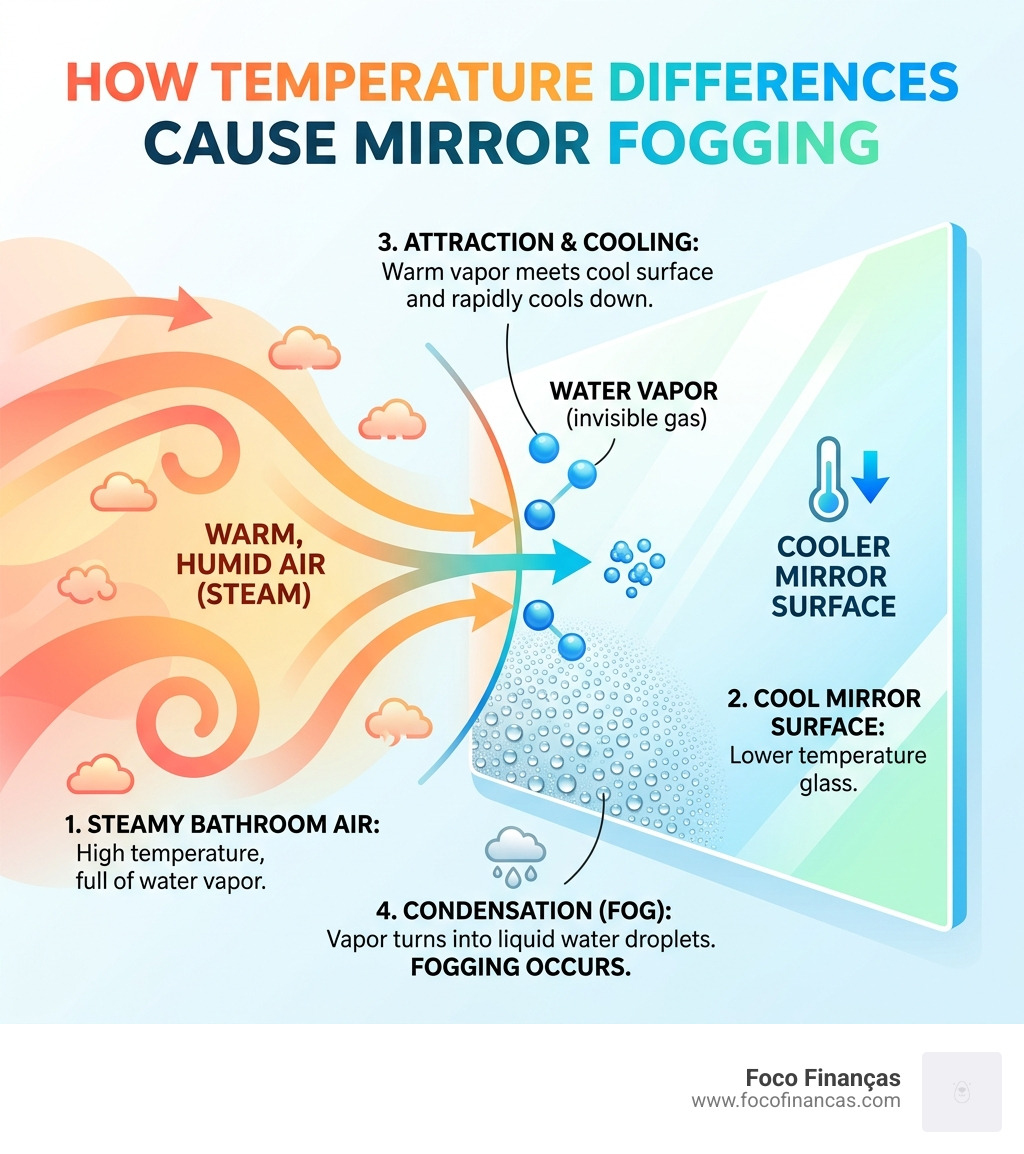
There’s a simple reason your mirror fogs up every morning. When hot shower steam hits the cooler glass surface, water vapor condenses into tiny droplets. The bigger the temperature gap between the air and the mirror, the worse the fog gets.
Most people just wipe it off. But the fog comes right back.
That’s the frustration. You’re trying to shave, do your makeup, or get ready fast — and your mirror is working against you.
A fog prevention mirror fan tackles the root cause instead of the symptom. Rather than heating the glass or coating it with chemicals, it simply keeps air moving so condensation never gets a foothold.
It’s a particularly smart solution for tech-forward homeowners who want something clean, effective, and easy to set up — no complex wiring, no permanent installation required.
Understanding the Fog Prevention Mirror Fan Technology
At its core, a fog prevention mirror fan is a masterpiece of micro-engineering. While traditional mirrors rely on passive surfaces, these systems introduce active airflow into the equation. The technology typically consists of a compact, high-speed micro-fan housed within the mirror’s frame or handle.
When activated, this fan draws in ambient air and directs a gentle, consistent stream across the face of the glass. This movement of air is crucial because it disrupts the boundary layer of moisture-laden air that typically settles on a cool surface. By keeping the air moving, the system prevents water molecules from bonding together into the tiny droplets we recognize as “fog.”
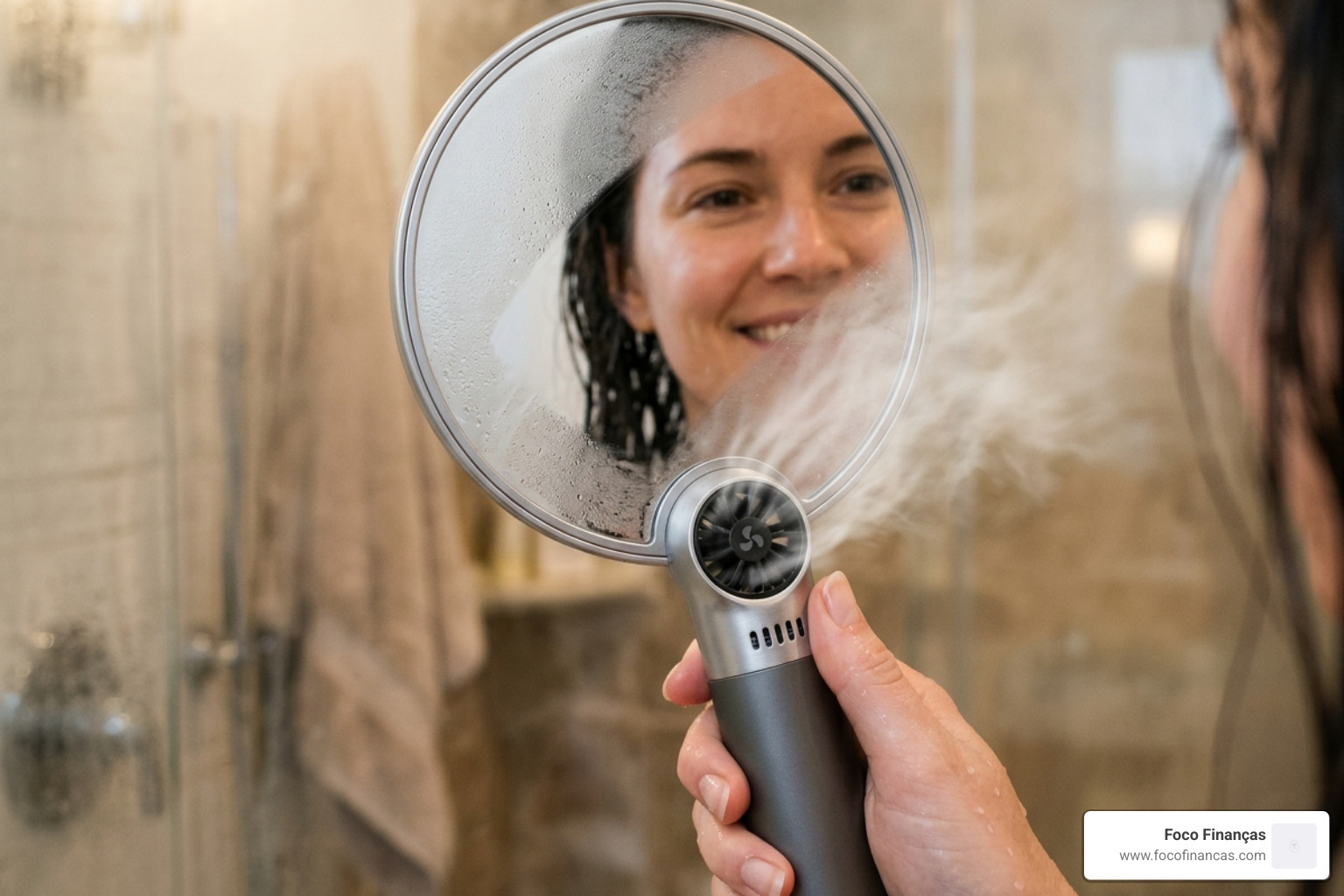
Beyond the fan itself, many of these systems incorporate high-intensity LED lighting. These aren’t just for show; they provide essential illumination in high-humidity environments where overhead lights might be diffused by steam. The combination of active airflow and bright LEDs ensures that your reflection remains sharp, focused, and completely unobstructed.
Benefits of a Fog Prevention Mirror Fan in Professional Settings
In professional environments—such as high-end dental offices, photography studios, or medical clinics—visibility isn’t just a convenience; it’s a requirement. A fog prevention mirror fan offers several key advantages over standard equipment:
- Uninterrupted Workflow: Professionals don’t have time to stop and wipe a mirror every thirty seconds. The continuous airflow ensures the view remains clear throughout a procedure or photo shoot.
- Durable Materials: These systems often feature highly polished stainless steel or break-resistant glass designed to withstand frequent use and rigorous cleaning protocols.
- Enhanced Lighting: The built-in LEDs improve focus and brightness, which is particularly vital for intraoral photography or detailed aesthetic work.
- Hygiene Standards: Professional-grade mirrors are often designed to be fully sterilizable, ensuring they meet strict health and safety codes.
How Micro-Fan Technology Differs from Heated Pads
When looking for a “clear mirror” solution, you’ll likely encounter two main contenders: micro-fans and heated pads (also known as demisters). While both achieve the same goal, they do so through very different physics.
Heated pads work by raising the temperature of the glass surface above the “dew point”—the temperature at which water vapor turns into liquid. By keeping the mirror warm (often around 104°F or 40°C), condensation simply cannot form. These are excellent for permanent bathroom installations but often require professional electrical wiring behind the wall.
Micro-fan technology, on the other hand, relies on kinetic energy rather than thermal energy. Because it doesn’t need to heat a large mass of glass, a fog prevention mirror fan is often much more energy-efficient and portable. Many fan-based systems are cordless, allowing them to be moved from room to room or adjusted on the fly, making them the superior choice for those who want a “plug-and-play” or handheld solution without tearing into their bathroom tile.
Comparing Active Airflow to Traditional Defogging
To truly appreciate the fog prevention mirror fan, we have to look at the alternatives. From “old school” DIY hacks to modern smart tech, defogging is surprisingly diverse.
| Feature | Mirror Fan System | Heated Pads (Demisters) | Anti-Fog Sprays/Hacks |
|---|---|---|---|
| Primary Method | Active Airflow | Radiant Heat | Chemical Barrier |
| Installation | Easy / Tool-free | Hard / Requires Wiring | Instant Application |
| Longevity | Years (Rechargeable) | Decades (Hardwired) | Temporary (Days/Weeks) |
| Portability | High | None | N/A |
| Best For | Grooming & Professional Use | Full Bathroom Remodels | Travel / Quick Fixes |
Many people start their journey by trying DIY methods like rubbing bar soap or shaving cream on their mirrors. While these create a hydrophobic film that prevents droplets from forming, they often leave a greasy residue or streaks that can be just as annoying as the fog itself. Vinegar solutions are another popular home remedy, but they only last about a week before needing reapplication.
For a deeper dive into these various methods, check out the ultimate guide to a fog free reflection every single morning.
Energy Efficiency and Performance Statistics
If you’re worried about your utility bill, you’ll be happy to know that modern defogging technology is incredibly lean.
- Smart Management: High-end defogger systems can reduce power consumption by up to 38% through smart energy management compared to older manual versions.
- Precise Heating: Radiant mirror defoggers typically operate at a regulated temperature of 104°F (40°C), costing only a few cents per month to run.
- Power Density: Professional-grade demisters provide roughly 200 W/m² of input power, allowing them to raise the mirror temperature by 20°C above the room’s ambient temp in minutes.
- Cordless Stamina: For those using a portable fog prevention mirror fan, a single USB charge can often provide up to 50 grooming sessions or roughly 4 hours of continuous operation.
Step-by-Step Fog Prevention Mirror Fan Installation and Setup
One of the biggest selling points of a fog prevention mirror fan is that you don’t need a degree in electrical engineering to get it running. Whether you are setting up a handheld unit for professional photography or a mounted version for your shower, the process is straightforward.
Step 1: Unbox and Charge Most modern systems use lithium-ion batteries. Before your first use, plug the unit into a USB port. A full charge usually takes a few hours and will provide enough juice for weeks of morning routines.
Step 2: Assemble the Components If you are using a professional intraoral or photography system, you will likely need to snap the interchangeable mirror (occlusal, buccal, or lingual) into the powered handle. Ensure it clicks into place to engage the airflow vents.
Step 3: Mounting (For Fixed Units) If your fan-mirror is designed for the shower, it will likely come with a mounting bracket and double-sided waterproof tape.
- Find a spot at eye level.
- Ensure the surface is bone-dry before applying the adhesive.
- Press firmly and let the adhesive cure for 24 hours before exposing it to steam.
For more inspiration on how to integrate these into your home, see our bathroom smart mirror ideas.
Preparing the Mirror Surface for Attachment
If you are attaching a fan unit or a heating pad to an existing mirror, cleanliness is your best friend. Even a tiny amount of dust or soap scum can cause an adhesive bond to fail in a humid environment.
We recommend using a microfiber cloth and a high-quality surface disinfectant or glass cleaner. Avoid “oily” cleaners that leave a scent; you want a completely stripped, clean surface. Once the surface is prepped, you can adjust the height of your mirror to ensure the micro-fan is positioned to blow air directly across the area you use most—typically the center of the glass.
Maintenance and Sterilization Protocols
To keep your fog prevention mirror fan performing at its peak, a little maintenance goes a long way.
- Mirror Surfaces: If you’re using stainless steel mirrors, these are often fully sterilizable in an autoclave (for dental use). For home use, a simple wipe with a soft cloth and glass cleaner is sufficient.
- Fan Intake: Check the small air intake vents every few months. Dust can accumulate here, reducing the airflow and making the fan work harder than it needs to.
- Battery Care: To maximize the life of your lithium battery, try not to let it drain to 0% frequently. Most units offer a 4-hour continuous runtime, which is plenty for most tasks, but keeping it topped up will ensure it’s ready when you are.
Professional Environments and Use Cases
While the “steamy bathroom” is the most common battleground, the fog prevention mirror fan is a hero in several professional sectors.
In dentistry, fog is the enemy of precision. When a dentist places a mirror inside a patient’s mouth, the warm breath instantly fogs the cold glass. A specialized intraoral mirror with a micro-fan prevents this, allowing for crystal-clear photography and more accurate diagnoses.
In photography, especially macro or product photography involving liquids and steam, a fan-based mirror system allows the photographer to capture the “perfect shot” without having to wait for the equipment to clear.
Even in high-end grooming salons and skincare clinics, these mirrors are becoming standard. They provide a level of clarity that helps professionals perform detailed work like eyebrow threading, lash extensions, or precision beard trimming. If you’re a fan of the DIY approach, you might even consider building your own setup; check out our guide on a diy bathroom smart mirror.
Improving Visibility with Integrated LED Lighting
We’ve all been there: the mirror is clear, but the lighting is terrible. Most fog prevention mirror fan systems solve this by embedding LEDs directly into the unit.
- Cool White (6000K): Best for seeing fine details, making it the choice for medical professionals and those applying intricate makeup.
- Warm White (3000K): Provides a more natural, flattering glow, perfect for general grooming and “real world” checks.
- Auto-Shutoff: To save battery, many smart units feature a 5-minute timer that automatically turns the lights off if you forget.
This combination of light and air ensures that your focus remains on your task, not on fighting the environment.
Frequently Asked Questions about Fog Prevention Mirror Fans
How long does a cordless fog prevention mirror fan last on a single charge?
Most high-quality cordless systems use rechargeable lithium-ion batteries. On average, you can expect about 4 hours of continuous operation. For the average person taking a 10-minute shower and grooming for 5 minutes, a single charge can last for 50 sessions—roughly a month and a half of daily use!
Are there different mirror types or attachments available for a fog prevention mirror fan system?
Yes! Especially in professional kits, you can find various interchangeable mirrors. Common shapes include:
- Occlusal: Large mirrors for capturing the entire arch of teeth.
- Buccal: Narrower mirrors for the sides of the mouth.
- Lingual: Specifically shaped for the inner surfaces of the teeth. For home use, some systems offer different magnification options (like 5x or 10x) that snap onto the main fan-powered base.
Can I use a fog prevention mirror fan for home grooming?
Absolutely. While they are popular in dental offices, “shower mirrors” with built-in fans are specifically designed for the home. They are usually made of break-resistant materials and feature waterproof designs that make them perfect for shaving or applying face masks in the shower.
Conclusion
At Foco Finanças, we believe that smart home upgrades should solve real problems without adding unnecessary complexity. The fog prevention mirror fan is the perfect example of this philosophy. It takes a simple physical concept—airflow—and uses it to eliminate one of the most persistent morning frustrations.
Whether you are a professional looking for better intraoral clarity or a homeowner wanting a “smart” upgrade for your vanity, these systems offer long-term reliability and exceptional performance. By choosing an active airflow system over temporary sprays or expensive hardwired heaters, you’re investing in a clear future.
For those interested in the deeper technical side of how these systems stay cool and clear, don’t miss our A Comprehensive Guide on a Smart Mirror Cooling System.
