
Why Installing an LED Mirror on Your Wall Is Easier Than You Think
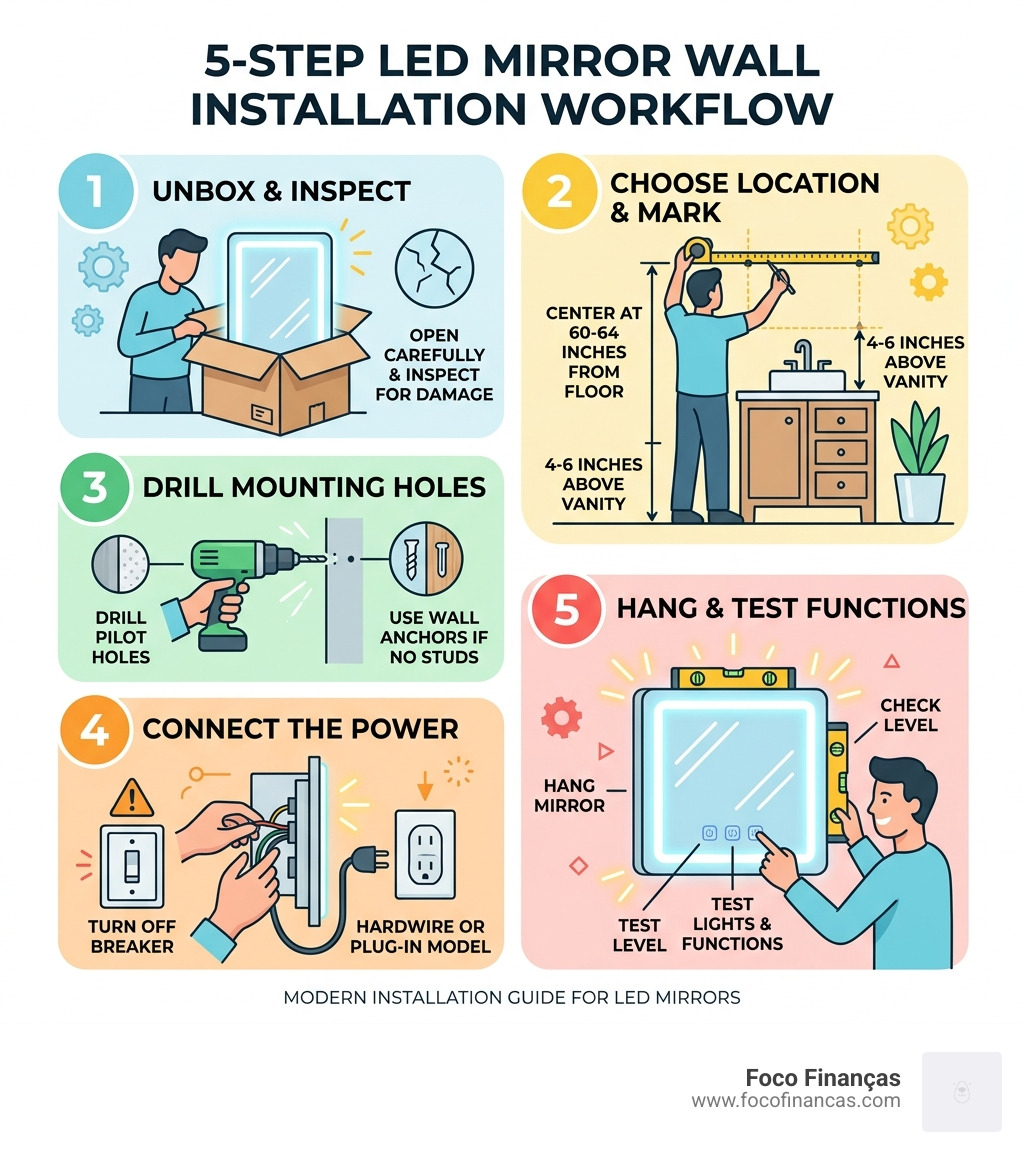
Learning how to install led mirror on wall is something most DIY homeowners can tackle in just 1–2 hours with the right tools and a clear process.
Here’s the quick overview of how to do it:
- Unbox and inspect your LED mirror for damage
- Choose your location — center the mirror at 60–64 inches from the floor, 4–6 inches above the vanity
- Mark and drill mounting holes, using wall anchors if you’re not hitting studs
- Connect the power — plug in or hardwire (turn off the breaker first)
- Hang the mirror, check it’s level, then test all functions
That’s the core process. But the details matter — especially for the electrical side.
LED mirrors are heavier than standard mirrors and need a power source. Most are hardwired to a 120V circuit, though plug-in models also exist. Both types require a bit more planning than hanging a regular mirror.
The good news? With the right preparation, this is a very manageable project — even if you’ve never done electrical work before.
Learn more about how to install led mirror on wall:
Essential Tools and Preparation for Your Project
Before we dive into the drilling and wiring, we need to make sure our “surgical table” is ready. Installing an LED mirror isn’t just about hanging glass; it’s about integrating technology into your wall.
The Tool Checklist
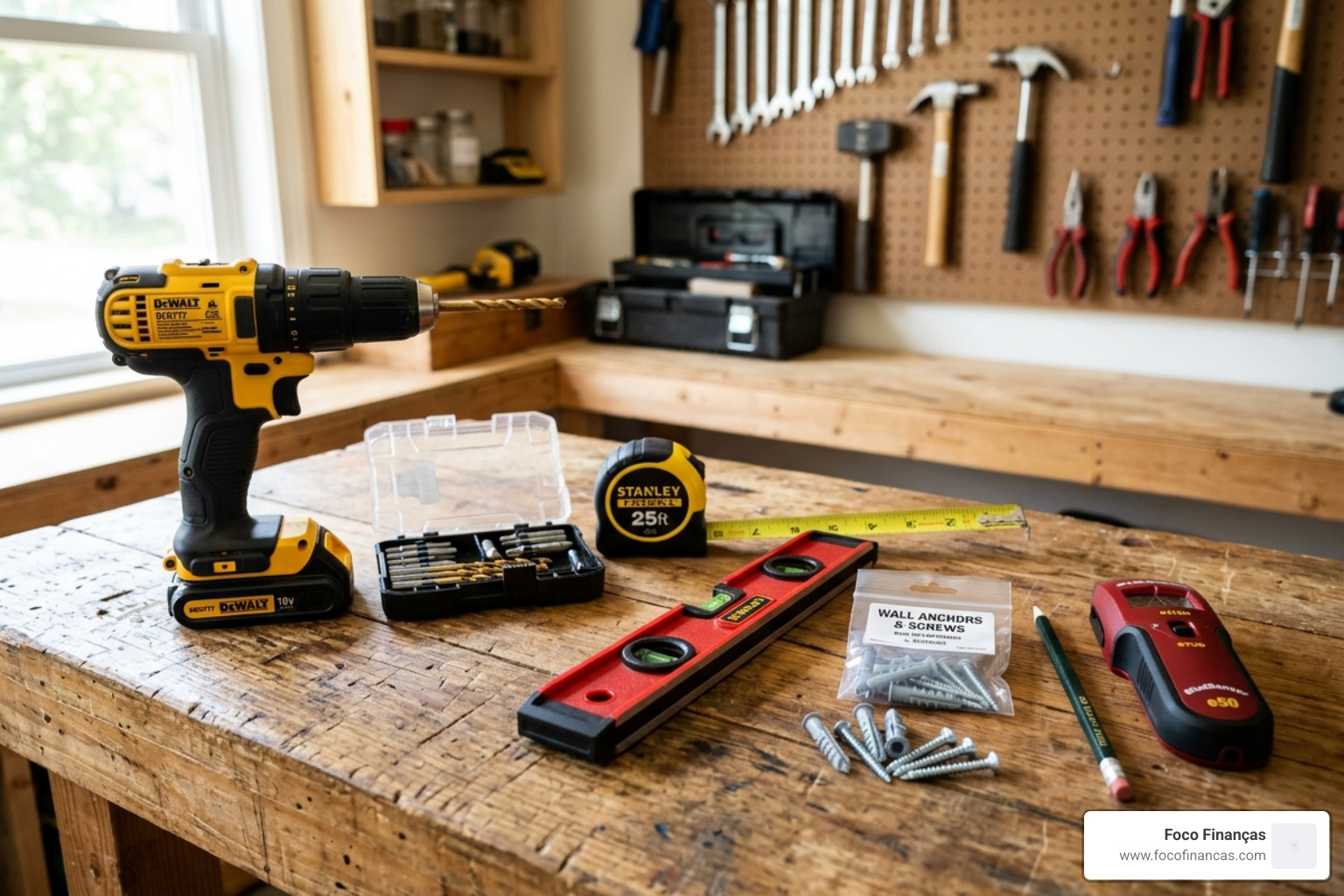
To avoid mid-project trips to the hardware store, gather these essentials:
- Power Drill & Bits: You’ll need various sizes depending on your wall type (drywall vs. tile).
- Measuring Tape: Accuracy is everything here.
- Level: A 2-foot bubble level or a laser level is best to ensure your vanity doesn’t look lopsided.
- Wall Anchors & Screws: Often included, but we recommend heavy-duty toggles if you aren’t hitting a stud.
- Voltage Tester: This is non-negotiable for safety when dealing with hardwired units.
- Wire Nuts & Electrical Tape: For making those secure connections.
- Stud Finder: To find the strongest support points in your wall.
For a deeper dive into the specifics of what goes into these high-tech units, check out our guide on essential materials for your smart mirror.
Workspace Setup and Inspection
When your mirror arrives, don’t just rip the box open. Lay it flat on a soft surface—like a rug or the cardboard box it came in—to prevent scratches.
Pro Tip: Check the glass immediately. LED mirrors are fragile, and you don’t want to get halfway through the installation only to notice a hairline crack. Keep the protective film and corner protectors on until the very last second. This protects the beveled edges and the sensitive touch sensors from oily fingerprints or accidental bumps.
How to Install LED Mirror on Wall: A Complete Step-by-Step Guide
Now that we are prepared, let’s get into the meat of the project. The goal is to achieve a flush, secure fit that looks like it was installed by a high-end contractor.
Step 1: Choosing the Perfect Location
The height of your mirror can make or break the room’s ergonomics. We recommend placing the center of the mirror at 60–64 inches from the finished floor. This is generally considered “eye level” for most adults.
If you are mounting it above a bathroom vanity, leave 4–6 inches of clearance between the bottom of the mirror and the top of the faucet or backsplash. This prevents water splashes from hitting the glass and ensures you have enough room to clean the vanity surface.
Step 2: Understanding Mounting Hardware
Different mirrors use different “skeletons.” You might encounter:
- Mounting Brackets: Simple metal plates that the mirror hooks onto.
- French Cleats: A two-piece interlocking system that provides superior stability for heavy mirrors.
- Hanging Profiles: A continuous rail that runs along the back of the mirror.
For more on choosing the right support for your specific wall type, see our article on how to build and install a wall-mounted smart mirror.
Measuring and Marking: How to Install LED Mirror on Wall
Precision is the difference between a “wow” factor and a “why is it crooked?” factor.
If your mirror is in portrait orientation, the mounting holes are often spaced about 10.5 inches apart (which is exactly 5.25 inches from the center line). Use your stud finder to see if you can hit any wood. If you can’t, don’t panic—high-quality drywall anchors can handle the weight of most standard LED mirrors.
| Orientation | Typical Hole Distance | Center Offset |
|---|---|---|
| Portrait | 10.5 inches | 5.25 inches |
| Landscape | 18 – 24 inches | 9 – 12 inches |
| Square | 12 inches | 6 inches |
When marking, always use a level. Mark the center of your vanity first, then measure outward to your mounting points. If you’re drilling into tile, use a carbide or diamond-tipped bit and go slow to avoid cracking the porcelain.
Final Steps: How to Install LED Mirror on Wall Securely
Once your brackets or cleats are screwed in, it’s time for the “heavy lifting.” If your mirror is larger than 36 inches, we strongly suggest having a partner help you.
- Align the Mirror: Lift the mirror and align the back slots with the wall brackets.
- The “Drop” Test: Lower the mirror slowly until you feel it “seat” into the hardware. Give it a gentle tug to ensure it’s locked in.
- Level Check: Place your level on top one last time.
- Clean Up: Remove the protective film. Use an ammonia-free cleaner and a microfiber cloth to wipe away any residue. Avoid spraying cleaner directly onto the mirror; spray the cloth first to prevent liquid from seying into the electrical components behind the glass.
Navigating Electrical Connections and Safety
This is the part that intimidates people, but it doesn’t have to. Most LED mirrors function by converting 120V AC house power into 12V DC output via an internal power supply (driver).
Safety First: The Golden Rule
Turn off the circuit breaker. Don’t just flip the wall switch. Go to the main panel and kill the power to the bathroom. Use your voltage tester on the wires in the wall to confirm they are “dead” before you touch them.
Hardwired vs. Plug-in
- Plug-in: These are the easiest. You simply mount the mirror and plug it into a nearby GFI outlet. However, many people find the dangling cord unsightly.
- Hardwired: This provides a clean, professional look with no visible wires. You’ll connect the house wiring directly to the mirror’s jumper cable.
Making the Connection
You will typically see three wires:
- Black (or Purple): The “Live” or “Hot” wire.
- White (or Gray): The “Neutral” wire.
- Green (or Bare Copper): The “Ground” wire.
Match them up: Black to Black, White to White, and Green to Green. Secure them with wire nuts and wrap them in electrical tape for extra security. Ensure your house wiring stays within 4 inches of the mirror’s center to keep everything concealed behind the frame.
For a deeper look at the hardware required for these connections, check out choosing the right mounting hardware for your smart mirror.
A Note on Code: Per the National Electrical Code (NEC) 400.12, you should never run a flexible power cord through a wall. If you want a flush mount but only have a standard outlet, consider installing a recessed “clock box” outlet so the plug can sit inside the wall cavity.
Troubleshooting and Long-Term Maintenance
You’ve hung it, wired it, and flipped the breaker. Now what?
Common Issues
- Flickering Lights: This usually indicates a loose wire nut or an incompatible dimmer switch. Most LED mirrors have built-in dimmers and should not be connected to a wall-mounted dimmer switch.
- Defogger Not Working: Ensure the defogger has its own connection or is tied to the light circuit. It can take 2–5 minutes to clear a steamed-up mirror.
- Touch Sensor Lag: If the touch sensor isn’t responding, try cleaning the glass. Sometimes a film of dust or moisture can interfere with the capacitive touch.
Maintenance for Longevity
To ensure your mirror lasts for the 50,000+ hours LEDs are rated for:
- Ventilation: Ensure your bathroom has a working exhaust fan. Excessive moisture can eventually corrode the silvering on the back of the mirror.
- Cleaning: Use only soft cloths. Abrasive sponges will scratch the glass and the sensitive touch-button area.
- Calibration: Some smart mirrors require a “reset” if the power flickers. Turning the breaker off and on again usually fixes most software glitches.
Cost Breakdown
If you decide DIY isn’t for you, here is what you can expect to pay for professional installation:
- Handyman/Installer: $90–$120 per hour.
- Electrician: $150–$300 (if a new outlet or junction box needs to be moved).
- Total Project Cost: Usually ranges from $250 to $1000 including the mirror itself.
Frequently Asked Questions about LED Mirror Installation
Do I need a professional electrician for a hardwired mirror?
While many DIYers handle the wiring themselves, we recommend a licensed electrician if you need to run a new circuit or move a junction box. This ensures everything is up to local building codes and maintains your homeowner’s insurance validity.
How high should I mount my LED mirror above the vanity?
The standard is 4 to 6 inches above the vanity top. However, the most important metric is that the center of the mirror sits at eye level (roughly 60–64 inches from the floor).
Can I install an LED mirror on a tiled bathroom wall?
Yes! You will need a masonry or diamond drill bit. Tape the area before drilling to prevent the bit from “walking” and scratching the tile. Go slowly and use plenty of water to keep the bit cool.
Conclusion
At Foco Finanças, we believe that upgrading your home shouldn’t require a master’s degree in engineering. Learning how to install led mirror on wall is a rewarding project that instantly elevates your bathroom’s interior aesthetics while adding functional, shadow-free lighting for your morning routine.
Whether you’re installing a simple backlit unit or a high-tech smart mirror, the key is in the preparation. Take your measurements twice, respect the electricity, and don’t be afraid to ask for a second set of hands when it’s time to hang the glass.
Ready to take your vanity to the next level? Check out our setting up your smart mirror: a complete guide for more advanced tips on customizing your space. Happy installing!
