
Why Heavy Duty Mirror Clips Matter for Large and Frameless Mirrors
Heavy duty mirror clips are the safest way to mount large, frameless, or thick glass mirrors securely on a wall. Here are the top options worth knowing about:
Best heavy duty mirror clips at a glance:
| Clip Type | Best For | Weight Capacity |
|---|---|---|
| Stainless steel J-clips | Frameless mirrors, bathrooms | Up to 15 lbs per clip |
| CRL Mirraco® adjustable clips | Seamed/beveled 1/2″ glass | Up to 50 lbs per lower clip |
| Crystal clear acrylic clips | Discreet look, 1/4″ glass | Light to moderate loads |
| Metal squared clips | Residential & commercial | Varies by mounting |
| 3M CLAW hangers | Drywall, no-stud installs | Up to 65 lbs |
A large mirror falling off a wall is not just a decorating problem — it’s a serious safety hazard. Standard picture hooks simply aren’t designed to handle the weight and thickness of heavy glass panels.
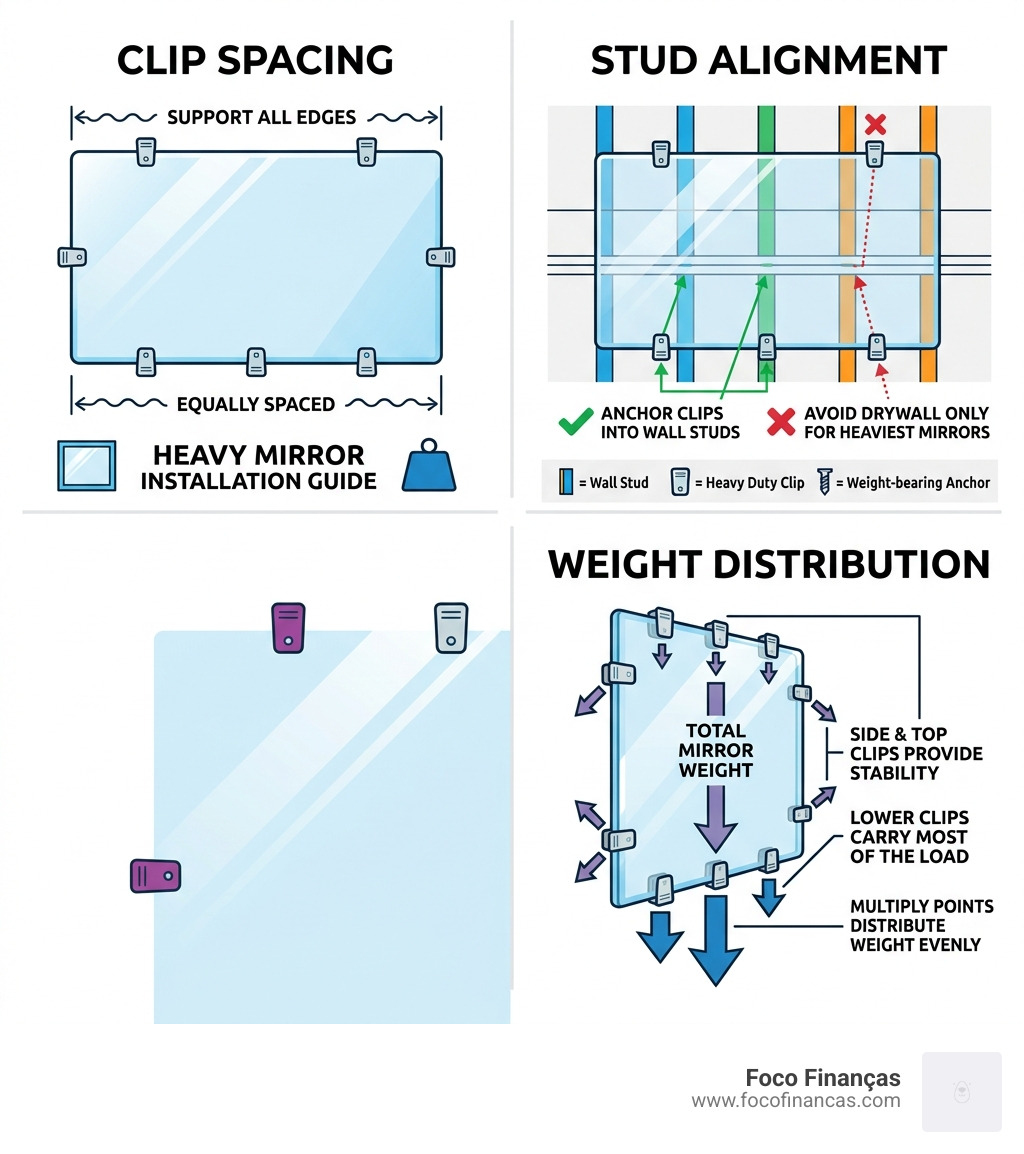
Heavy duty clips are built differently. They grip the mirror edge directly, distribute weight across multiple mounting points, and are made from materials like stainless steel or reinforced acrylic that hold up over time — even in humid spaces like bathrooms.
Whether you’re mounting a sleek frameless bathroom mirror or a large decorative panel, choosing the right clip makes the difference between a secure installation and a dangerous one.
Types of Heavy Duty Mirror Clips for Every Project
When we talk about heavy duty mirror clips, we aren’t just talking about one-size-fits-all plastic tabs. Depending on the thickness of your glass and the aesthetic you want to achieve, there are several specialized designs to consider. Each serves a specific purpose in ensuring your mirror stays exactly where you put it.
J-Clips, L-Clips, and Z-Clips
These are the workhorses of the mirror-hanging world.
- J-Clips: Named for their shape, these feature a deep channel that cradles the bottom edge of the mirror. They are often used as the primary load-bearing support at the base.
- L-Clips: These are lower-profile and often used on the sides or top to prevent the mirror from tipping forward.
- Z-Clips: Frequently used for hanging mirrors that need to be flush against the wall, these operate on a cleat-like system.
Adjustable and Decorative Options
If you are working with mirrors that have unique edges, such as beveled or seamed glass, standard clips might not fit perfectly. Adjustable clips allow you to fine-tune the grip, ensuring a snug fit regardless of slight variances in glass thickness. For those who want the hardware to disappear, crystal clear acrylic or “bulldog” style clips offer a transparent look that doesn’t distract from the mirror itself.
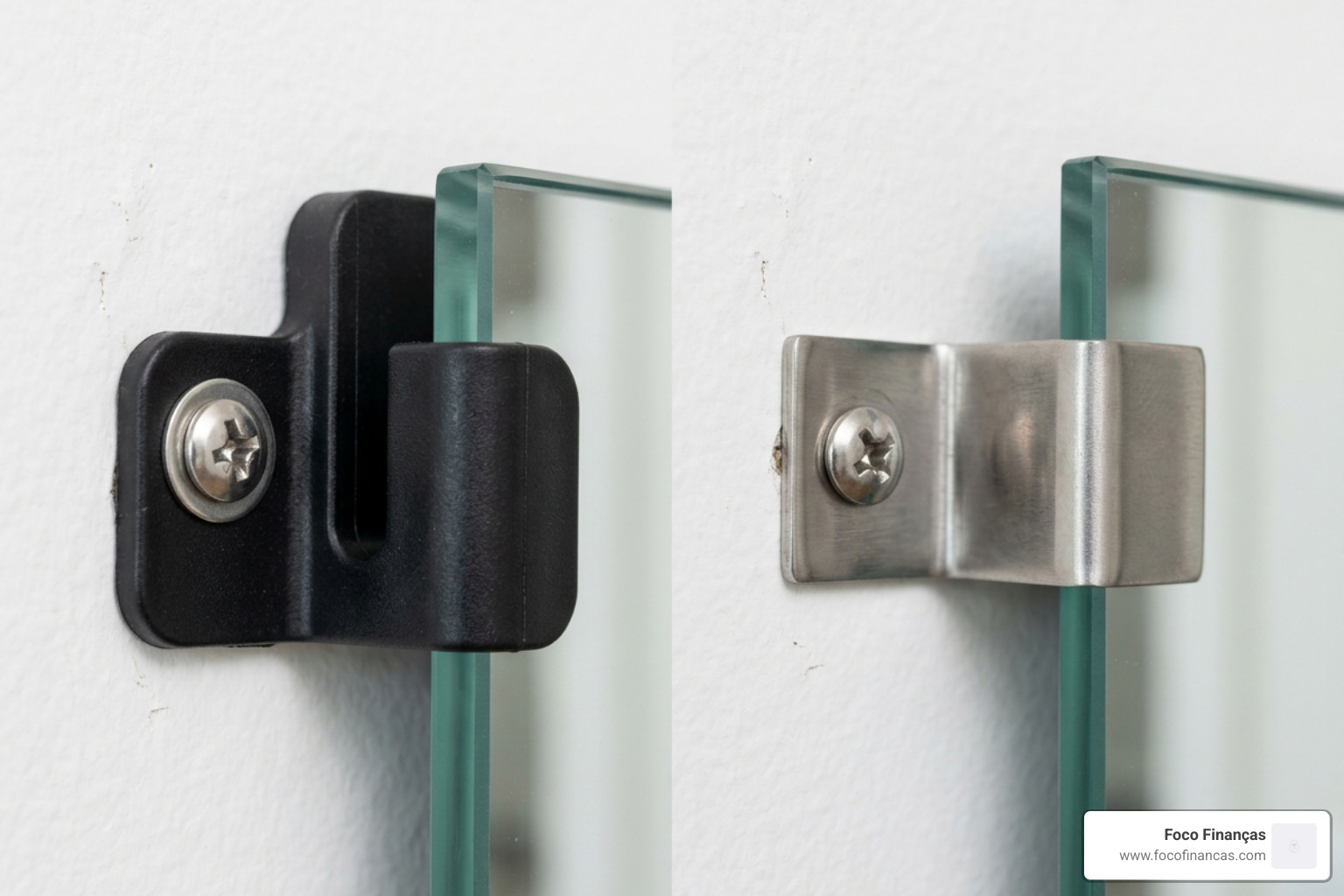
To help you decide which material suits your project, we’ve put together a comparison of the most common materials used in the industry:
| Material | Finish Options | Best Environment | Durability |
|---|---|---|---|
| Stainless Steel | Silver/Chrome | Bathrooms/High Humidity | Excellent; Rust-resistant |
| Nickel-Plated Steel | Brushed Nickel | Residential/Commercial | High; Very strong |
| Zinc-Plated Metal | Silver | Dry areas | Good; Corrosion-resistant |
| Acrylic/Plastic | Crystal Clear | Living areas/Low profile | Moderate; Best for 1/4″ glass |
When planning your installation, it is vital to match the clip to the specific project requirements. For more specialized projects, you might find our guide on Choosing the Right Mounting Hardware for Your Smart Mirror particularly helpful.
Metal vs. Plastic Heavy Duty Mirror Clips
The debate between metal and plastic usually comes down to two things: environment and weight.
Metal clips, particularly those like the Heavy-Duty Squared Metal Mirror Clip for Secure Mounting, are the gold standard for durability. They are typically 3/4″ wide and made of robust materials that prevent the mirror from shifting or vibrating. In high-traffic commercial settings or bathrooms where steam is a constant factor, metal is the way to go.
Plastic or acrylic clips, such as the popular Glacier Bay 1/4 in. models, are favored for their “invisible” look. While high-quality acrylic is surprisingly strong, it can become brittle over decades or if exposed to harsh UV light. However, for a standard 1/4″ thick home mirror, clear clips provide a seamless aesthetic that metal simply can’t match.
Adjustable and Spring-Loaded Options
For professional-grade installations, we often look toward adjustable sets. The CRL Nickel Plated Adjustable Mirraco® Mirror Clip Set for 1/2″ Seamed is a prime example of high-end engineering. These sets allow for an adjustment range of 0 to 7/8 inches, making them perfect for thicker 1/2″ seamed or beveled glass.
One of the coolest features of these adjustable sets is the “no-drill” appearance. You don’t have to drill holes through the mirror glass itself; the clips grip the edges securely. The top clips are often expandable, allowing you to slide the mirror in and then lock the clip into place for a clean, screwless look on the front face.
Essential Weight Limits and Material Specifications
Understanding weight limits is the most critical part of your DIY journey. If you overload a clip, the hardware can fail, leading to shattered glass and wall damage. Most heavy duty mirror clips are rated based on the thickness of the glass they can hold, typically 1/8 inch or 1/4 inch.
Common Weight Ratings
- Standard Plastic Clips: Often rated for around 4 to 5 lbs per clip. A 6-pack can comfortably hold a medium-sized bathroom mirror.
- Stainless Steel J-Clips: Products like the Prime-Line Silver Heavy Duty Mirror Holder Clip 15 lb 6 pk Wholesale – Opentip are rated for 15 lbs per clip. This means a set of these at the bottom can support a very substantial glass panel.
- Professional Adjustable Clips: Some lower clips in specialized sets can hold up to 50 lbs each when mounted directly into wall studs every 4 feet.
When building high-tech projects, the weight of the glass plus the electronics can add up quickly. We recommend checking out our list of Essential Materials for Your Smart Mirror to ensure your hardware matches your total project weight.
Understanding Load-Bearing for Heavy Duty Mirror Clips
Load-bearing isn’t just about the clip; it’s about what the clip is attached to. A heavy-duty clip screwed only into thin drywall is only as strong as the drywall itself.
- Stud Mounting: This is the “gold standard.” Whenever possible, we want to drive our screws directly into the wooden studs behind the wall. This provides the shear strength necessary to hold 50+ lbs.
- Drywall Anchors: If a stud isn’t available, you must use high-quality plastic or toggle anchors. Standard kits often include 3/16″ anchors, but for truly heavy mirrors, we might upgrade to heavy-duty toggle bolts.
- The 3M CLAW Alternative: If you are nervous about drilling, the 3M CLAW is a unique engineered steel hanger that pushes into drywall and can hold up to 65 lbs without needing a stud.
For a deeper dive into the physics of mounting, see our tutorial on How to Build and Install a Wall Mounted Smart Mirror.
Step-by-Step Installation Guide for Secure Mounting
Installing heavy duty mirror clips is a straightforward process, but it requires precision. A mirror that is even 1/8th of an inch off-level will be noticeable every time you walk by it.
Preparation and Tools
You will need:
- A Phillips head screwdriver
- A power drill with a 3/16″ bit (for anchors)
- A level (laser levels are great, but a bubble level works fine)
- A pencil
- Your Heavy Duty Mirror Mounting Clips-6/Pack | Picture & Mirror Hanging
The Installation Process
- Mark the Bottom: Determine where you want the base of the mirror to sit. Use your level to draw a straight line.
- Locate Studs: Use a stud finder. If your clips align with studs, great! If not, mark where your anchors will go.
- Install Bottom Clips: Drill your pilot holes and insert the plastic anchors. Screw the J-clips or bottom supports into place.
- Position the Mirror: Rest the mirror in the bottom clips. It helps to have a second person hold it steady.
- Mark Top/Side Clips: While the mirror is held in place, mark the positions for the top clips. They should be snug against the glass but not so tight that they cause stress fractures.
- Secure Top Clips: Remove the mirror, install the anchors for the top clips, then slide the mirror back in and screw the top clips down.
If you’re building a more complex setup, like a mirror with integrated tech, follow our DIY Smart Mirror: A Step-by-Step Guide for specific mounting nuances.
Mounting Hardware on Drywall and Wood
The surface you are mounting to dictates the hardware.
- On Wood/Studs: Use #6 x 1-1/2″ oval head screws. You don’t need anchors here; the wood threads provide all the grip you need.
- On Drywall: Always use the anchors provided in the kit. Most heavy-duty kits come with 3/16 inch plastic anchors designed to expand behind the wallboard.
If you are creating a custom frame to go around your mirror, you’ll need to adjust your mounting strategy. We’ve covered this in Creating a Smart Mirror Frame: A DIY Guide.
Frequently Asked Questions about Mirror Hardware
Can I use heavy duty mirror clips in a bathroom?
Yes, but you must choose the right material. Bathrooms are high-humidity environments that cause standard steel to rust. We recommend using stainless steel or chrome-plated brass clips. The CRL 1/4″ Clear Mirror Clip, Screw and Anchor Set | CRL is also a great choice because the acrylic material is completely immune to corrosion.
Are there no-drill alternatives for heavy mirrors?
If you’re a renter or just hate the idea of drilling, there are options. Command Picture Hanging Strips can hold up to 20 lbs for mirrors up to 24″x36″. For heavier loads, the 3M CLAW is a fantastic “no-tool” option that holds up to 65 lbs by pushing hardened steel claws into the drywall, leaving only tiny pinpricks if you ever decide to move the mirror.
How many clips do I need for a large mirror?
A general rule of thumb is to place a clip every 3 to 4 feet along the bottom for weight support. For a standard 36″ wide mirror, two clips at the bottom and two at the top are usually sufficient. For mirrors wider than 4 feet, add a third clip in the center of the bottom edge to prevent the glass from bowing or sagging.
Conclusion
At Foco Finanças, we believe that doing it yourself doesn’t mean you have to compromise on safety or professional results. By choosing the right heavy duty mirror clips, you ensure that your beautiful glass features remain a permanent and safe part of your home decor.
Remember to check your clips annually, especially in bathrooms. If you notice any signs of rust on metal clips or yellowing/cracking in plastic ones, it’s time for a quick replacement. Most clips are very affordable, and replacing them is a small price to pay for peace of mind.
For more tips on home improvement and specialized hardware, explore our other guides in the hardware category. Happy mounting!
