
Why the Augmented Reality Fitting Room Is Changing Fashion Retail
Augmented reality fitting room technology lets shoppers virtually try on clothes, shoes, and accessories in real time — using just a smartphone camera or an in-store smart mirror — without ever physically touching a garment.
Here’s what you need to know at a glance:
- What it does: Overlays 3D clothing models onto a live image of your body using AR and AI
- Who it’s for: Online shoppers, in-store customers, and fashion retailers of all sizes
- Main benefit: Reduces sizing guesswork, boosting buyer confidence and cutting return rates
- How you access it: Through a mobile app, a brand’s website (via WebAR), or an in-store smart mirror
- Why it matters now: The global virtual fitting room market was valued at $2.73 billion in 2020 and is growing at a compound annual rate of 25.2%
Online shopping has a friction problem. Around 97% of consumers have abandoned a shopping trip because the process felt too inconvenient, according to the National Retail Federation. For fashion specifically, the pain is even sharper — roughly 30% of all online clothing purchases get returned, compared to just 9% in physical stores. Most of those returns come down to one simple issue: the fit wasn’t right.
That gap between what shoppers see on a screen and what actually fits their body is exactly what augmented reality fitting rooms are designed to close.
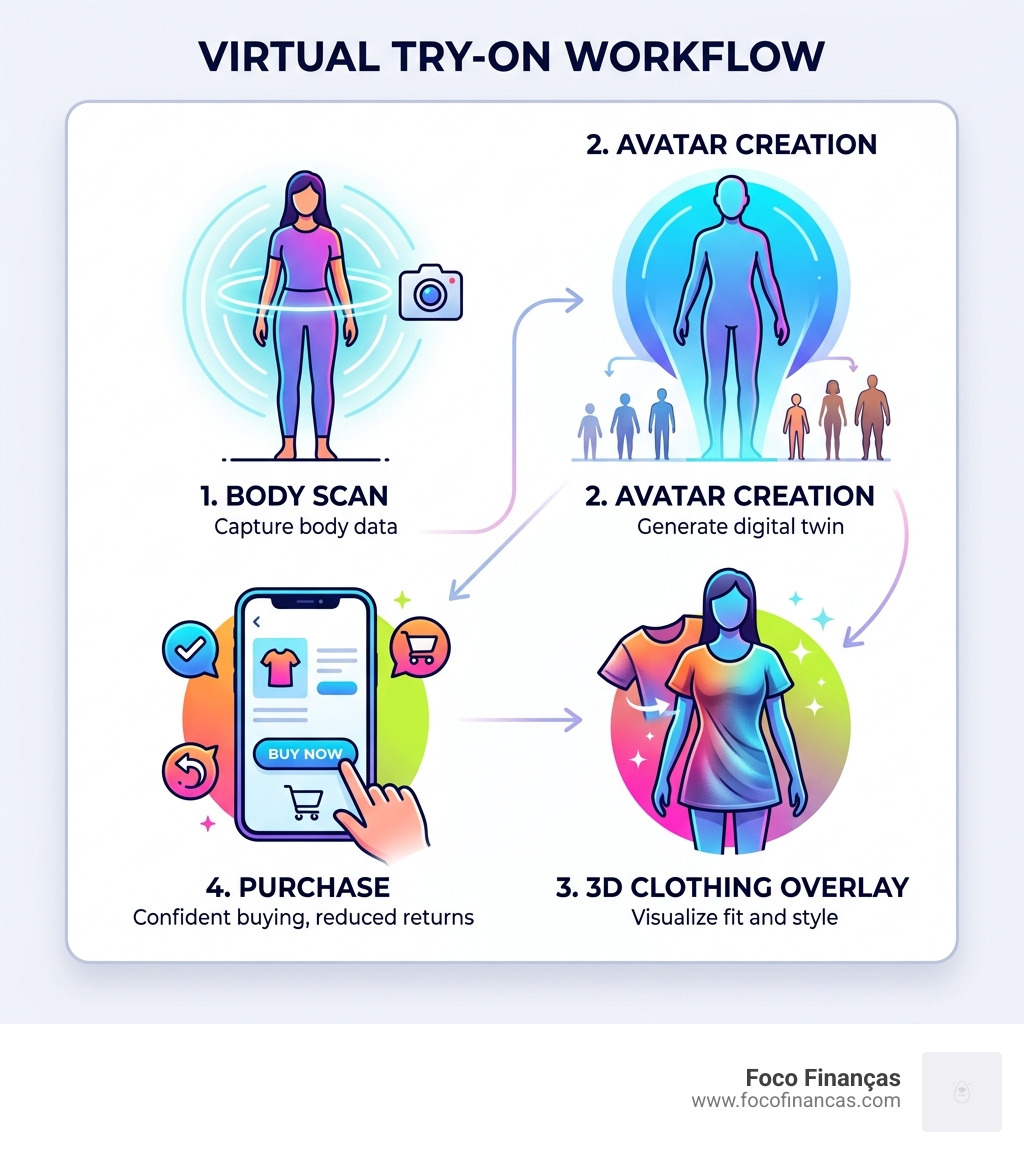
What is an Augmented Reality Fitting Room?
At its core, an Augmented reality fitting room is a software-driven solution that blends the digital and physical worlds. We like to think of it as a “digital twin” for your wardrobe. By using Augmented Reality (AR) and Artificial Intelligence (AI), these systems allow a shopper to see how a specific item of clothing looks, drapes, and fits on their own body without the hassle of a physical changing room.
This technology isn’t just a gimmick; it’s a sophisticated suite of tools involving computer vision and real-time 3D modeling. Whether it is a Virtual Fitting Room for E-Commerce – Huhu.ai or a high-tech mirror in a flagship store, the goal is the same: providing a “See-Now-Buy-Now” experience that removes the guesswork from fashion.
How AR and AI Power the Virtual Experience
To make a virtual try-on feel real, several layers of tech work together behind the scenes. We use scene understanding to help the software recognize the floor, the walls, and, most importantly, the person standing in front of the camera.
- Pose Estimation & Body Segmentation: AI looks at the camera feed and identifies key points on the human body (shoulders, elbows, waist). It then “segments” the person from the background, creating a clean silhouette.
- 3D Mesh Creation: The system generates a 3D mesh or a digital human model. This is like a wireframe that moves exactly as the user moves.
- Landmark Detection: This ensures that a shirt collar sits on the neck and not on the chin.
- Latent Diffusion Models: Some advanced systems now use these AI models to generate photorealistic textures, ensuring the fabric looks like silk or denim rather than flat plastic.
The Evolution of the Augmented Reality Fitting Room
We’ve come a long way from the early days of “sticker-style” overlays where a 2D image of a dress was simply pasted over a photo. Today, we have virtual testers that offer 360-degree scans.
One of the biggest leaps has been WebAR. In the past, you had to download a bulky app to try on shoes. Now, thanks to platforms like Kivisense | Virtual Try-on from Head to Toes, AR & 3D Solutions , customers can access high-quality AR experiences directly through their mobile browser by scanning a QR code. This “frictionless” access is a game-changer for conversion rates.
Key Benefits: Why Retailers are Adopting Virtual Try-On
Why are we seeing so many brands jump on this trend? It’s not just because it looks cool (though it definitely does). It’s because an Augmented reality fitting room solves real business problems.
Research shows that 40% of buyers are willing to pay more for a product if they can experience it through AR first. It builds an emotional bond and a sense of “ownership” before the item even leaves the warehouse.
| Feature | Online (Traditional) | Online (With AR Fitting) | In-Store (Traditional) |
|---|---|---|---|
| Return Rate | ~30% | Significantly Lower | ~9% |
| Customer Confidence | Low (Guesswork) | High (Visual Proof) | High (Physical) |
| Engagement Time | Short | Long (Interactive) | Medium |
| Inventory Needs | High | Low (Virtual Stock) | High |
Reducing Returns with an Augmented Reality Fitting Room
The “size-related uncertainty” is the biggest enemy of e-commerce. Did you know that 30% of fashion returns are due to items being too small, and 22% are because they are too large? That is over half of all returns caused by a lack of fit visualization.
By implementing a Virtual try-on – AR clothing and fashion solutions for ecommerce , retailers provide shoppers with the tools to see if a “Medium” actually fits like a “Medium.” This level of accuracy boosts consumer confidence and slashes the logistical nightmare of processing returns, which can cost retailers 5 to 25 times more than retaining an existing customer.
Enhancing the Omnichannel Shopping Experience
We see the Augmented reality fitting room as the ultimate bridge between physical and digital storefronts.
- Social Sharing: Many apps allow users to snap a photo of their virtual outfit and send it to friends for a second opinion. This turns every try-on into a potential viral marketing moment.
- Interactive Shop Windows: Imagine walking past a store after hours and being able to “try on” the jacket in the window using an AR display.
- Personalized Advice: AI can analyze a user’s body shape and suggest styles that flatter them most, acting as a 24/7 digital personal stylist.
How to Implement Virtual Fitting Technology
Implementing this tech might seem daunting, but we can break it down into a manageable workflow. It starts with your product catalog. You can’t have a virtual fitting room without 3D assets.
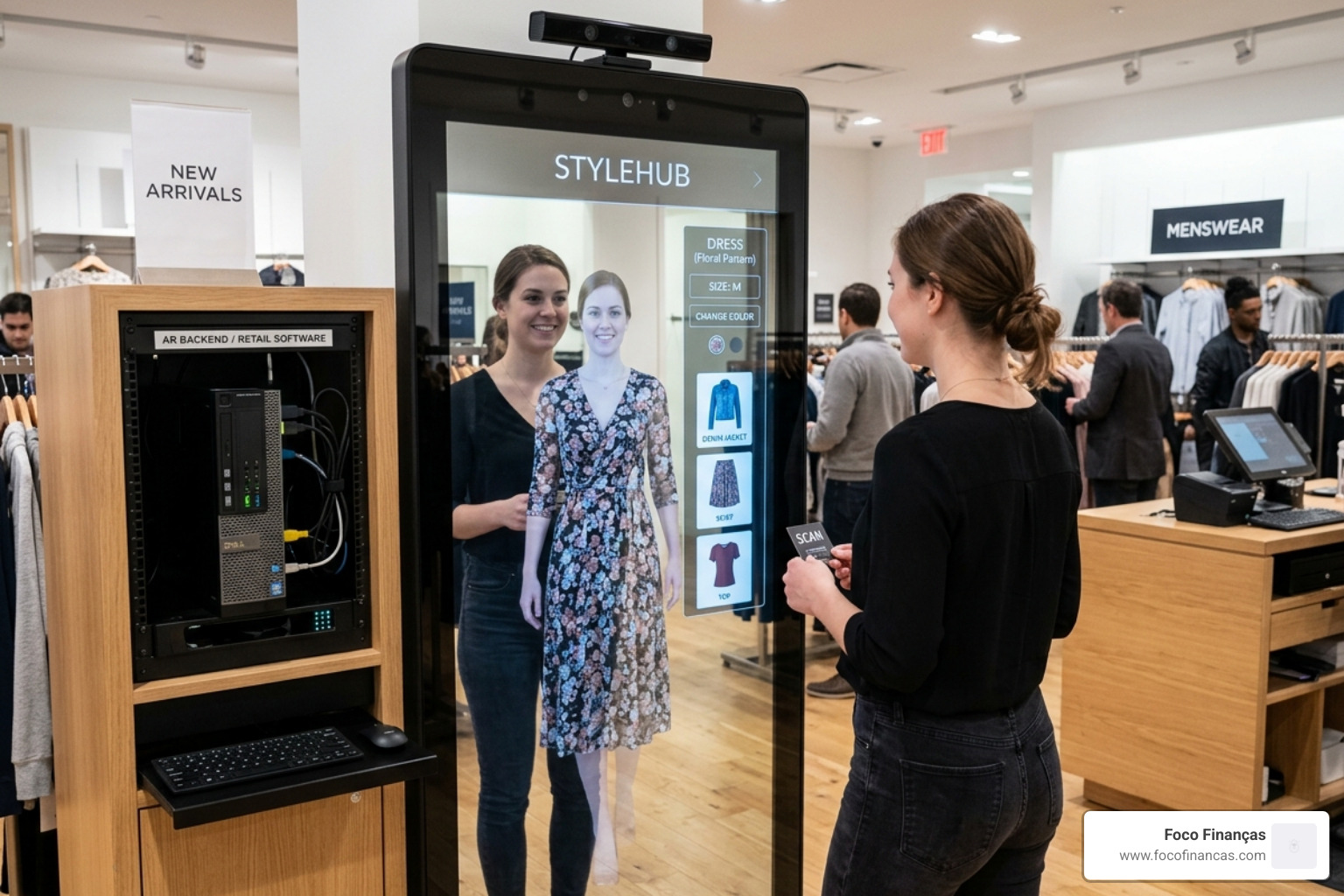
Step-by-Step Implementation:
- Digitize Your Catalog: Convert your physical garments into high-fidelity 3D models (GLB or GLTF formats).
- Choose Your Platform: Decide if you want an in-store mirror, a mobile app, or a WebAR solution.
- Integrate API/Plugins: If you use Shopify or Magento, there are often ready-made plugins to connect your 3D assets to your product pages.
- Hardware Setup: For physical stores, you’ll need depth cameras and high-definition screens. You can check out more about Hardware solutions to see what fits your space.
- RFID Integration: In-store mirrors can use RFID tags to instantly recognize which garment a customer is holding, automatically loading the 3D model on the screen.
Choosing Between Smart Mirrors and Mobile Apps
There is no one-size-fits-all here.
- Mobile Apps/WebAR: Best for reaching customers at home. Transform Your Shopping with Virtual Try Room is a great example of how users can use their smartphone cameras to create avatars and browse collections from their couch.
- Smart Mirrors/In-store Holograms: These are incredible for foot traffic and “wow” factor. They allow customers to try on items that might not be in stock in their specific size or color, reducing inventory shrinkage and maximizing floor space.
Custom Development vs. Ready-Made Solutions
This is a classic “build vs. buy” scenario.
- Ready-Made: Solutions like Clothes – TOUCH TRY offer quick onboarding and lower upfront costs. They are perfect for small to medium businesses that want to get started fast.
- Custom Development: For global brands, custom builds offer better data control, unique branding, and the ability to scale complex features. However, be prepared for a longer time-to-market and higher maintenance costs.
Technical Challenges and Development Costs
We have to be honest: building a top-tier Augmented reality fitting room isn’t without its hurdles. One major challenge is processing power. Rendering a realistic silk dress that flows as a user dances requires significant GPU power, often handled through cloud computing.
Another limitation is tracking accuracy. While ARKit (Apple) and ARCore (Google) are amazing, they can sometimes struggle with partial body detection (like just a hand or a foot) or in poor lighting conditions.
Best Practices for an Augmented Reality Fitting Room Design
When we design these experiences, we follow a few golden rules:
- Avoid “Gorilla Arm” Syndrome: This happens when a user has to keep their arms raised for too long to interact with a screen. We solve this by using simple gesture controls or foot-based navigation.
- UI Simplicity: Don’t overcrowd the screen. The focus should be on the user and the clothes.
- Calibration Steps: Include a quick 3-second calibration to ensure the body measurements are accurate.
- Multimodal Inputs: Allow users to switch between voice, gesture, and touch.
Hardware and Architecture Requirements
For a robust system, you need more than just a camera.
- Depth Cameras: These measure the distance between the sensor and the user, allowing for much more accurate 3D mapping.
- Global Server Support: To ensure a lag-free experience, use a network like AWS or Alibaba Cloud, especially if you have a global audience.
- GDPR Compliance: Since you are “scanning” bodies, data privacy is paramount. Ensure all processing is either done on-device or that data is encrypted and anonymized.
Frequently Asked Questions about Virtual Fitting Rooms
How much does it cost to develop a custom virtual fitting room?
Based on industry standards, a basic Augmented reality fitting room with essential features takes about 800 to 900 development hours. At an average rate of $35/hour, you are looking at a base estimate of around $30,000.
However, this price can climb quickly depending on:
- The number of 3D models (digitizing a whole 500-item collection is a major task).
- The complexity of fabric physics (denim is easier than lace).
- Integration with existing POS or e-commerce databases.
Can virtual fitting rooms work without downloading an app?
Yes! This is the beauty of WebAR. Using technology from providers like Demo | TryItOn , customers can simply click a link or scan a QR code to launch the camera in their mobile browser. It offers instant motion response without the commitment of an app download.
How do these systems handle user privacy and body data?
Privacy is a top concern for us and our customers. Many modern systems offer no-data storage options, where the body scan is processed in real-time and never saved to a server. For those who are camera-shy, avatar-based try-ons are a great alternative — the user enters their measurements, and the clothes are shown on a 3D mannequin that matches their proportions.
Conclusion
The Augmented reality fitting room is no longer a futuristic dream; it is a retail reality. As we move toward 2026 and beyond, we expect to see even more hyper-personalization, including metaverse avatars and even haptic feedback that lets you “feel” the fabric.
For retailers, the choice is clear: adapt to these digital expectations or risk being left behind in a world where convenience is the ultimate currency. If you’re looking to dive deeper into the tech side of things, Explore more hardware insights on our site.
The future of fashion is interactive, immersive, and incredibly personal. We can’t wait to see how you use it to transform your brand!
