
Why a Step by Step Mirror Guide Makes All the Difference
A step by step mirror guide is exactly what you need before you pick up a drill. Here’s the quick version:
How to hang a mirror (quick overview):
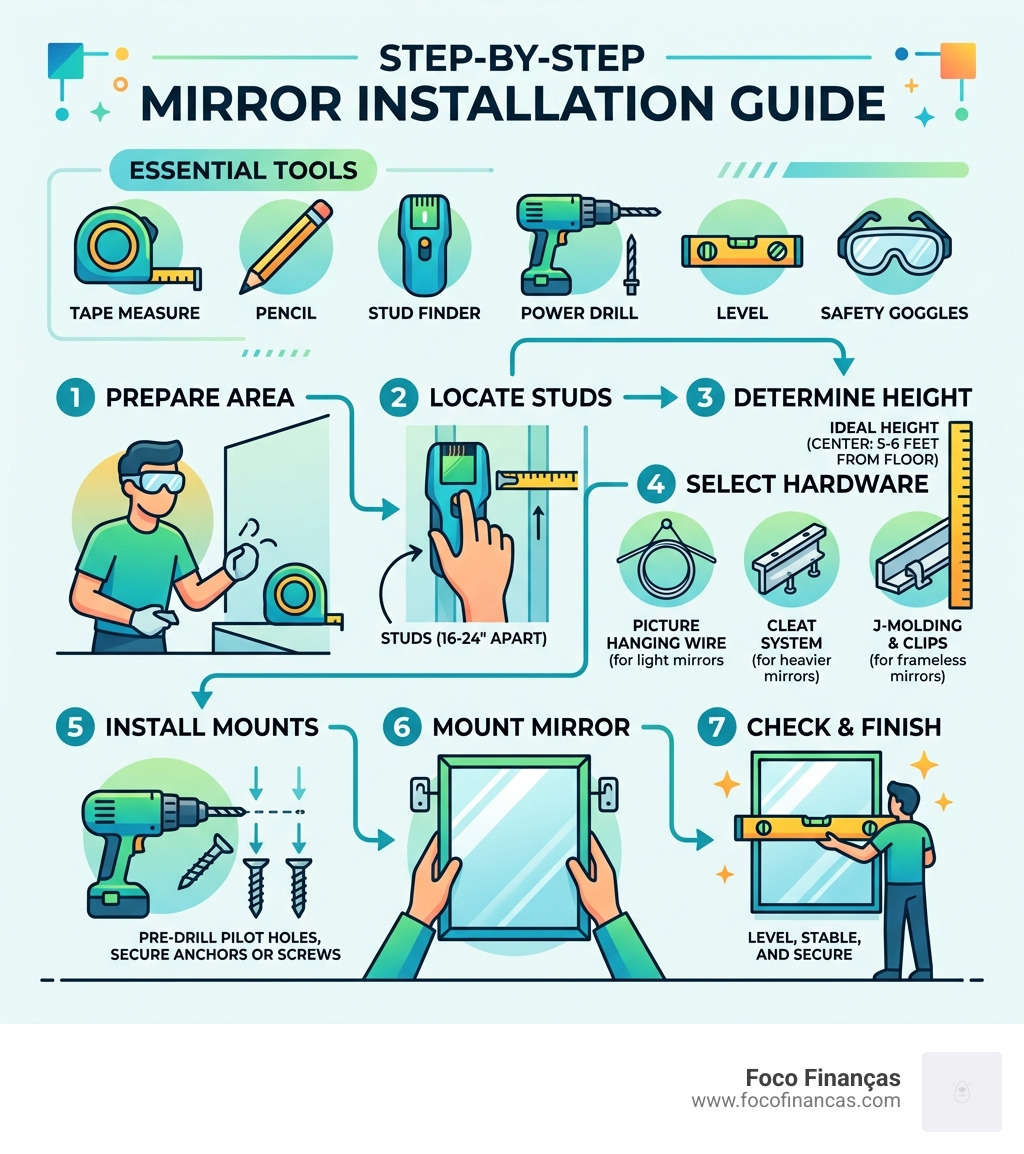
- Gather tools: drill, level, stud finder, measuring tape, pencil, safety goggles
- Find your wall studs (spaced 16-24 inches apart)
- Mark the hanging height (center at 5-6 feet from the floor)
- Choose the right hardware for your mirror’s weight and wall type
- Pre-drill pilot holes and install anchors or screws
- Hang the mirror, check it’s level, and test for stability
Mirrors do a lot of heavy lifting in a room. They bounce light around, make small spaces feel bigger, and pull a whole design together. But a mirror that falls off the wall? That’s the opposite of stylish — and it’s a real safety risk.
The good news: hanging a mirror correctly isn’t complicated. It just requires the right prep.
Whether you’re mounting a sleek frameless mirror in a bathroom, a large decorative piece above a mantel, or a full gym wall setup, the core principles are the same. Know your wall. Pick the right hardware. Measure twice, drill once.
This guide walks you through every step — from picking tools to the final stability check.
Preparation and Tools for Your Step by Step Mirror Guide
Before we dive into the drywall, we need to talk about your toolkit. Think of this as the “mise en place” of home improvement. Having everything within arm’s reach prevents that frustrated mid-project sprint to the hardware store.
The Essential Toolbox
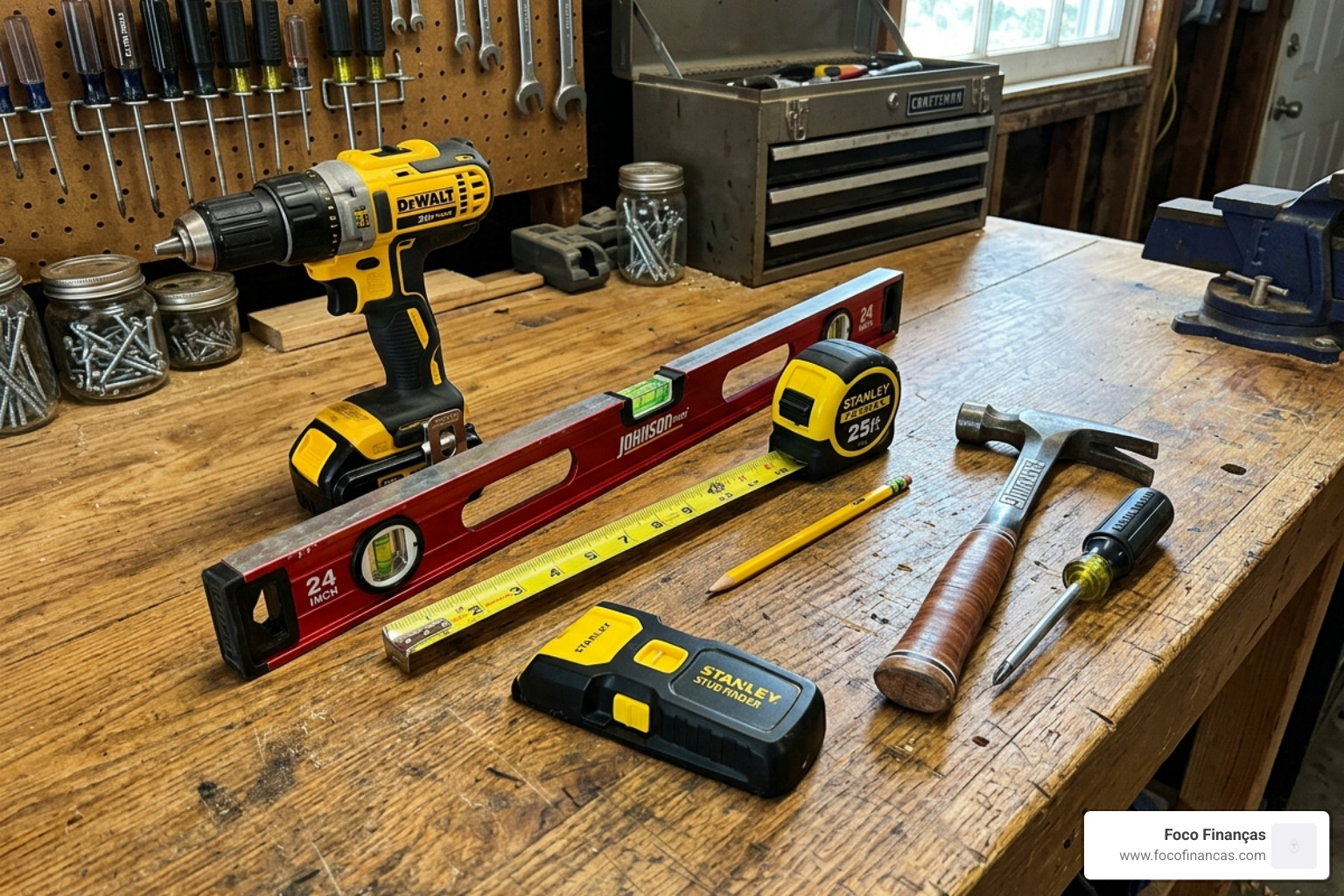
To execute a flawless installation, you will need:
- Measuring Tape: Precision is everything.
- Level: A bubble level or a laser level to ensure your reflection isn’t slanted.
- Pencil: For marking your “X” without permanent damage.
- Power Drill and Bits: Essential for creating pilot holes.
- Safety Gear: Goggles and gloves are non-negotiable when handling glass.
- Stud Finder: Your best friend for heavy mirrors.
- Hammer and Screwdriver: For manual adjustments.
When gathering your supplies, the mirror’s purpose dictates its placement. For a bathroom vanity, functionality is king. For a decorative living room piece, it’s all about the “eye-level” rule. A common industry standard is to hang the mirror so the center sits approximately 5 to 6 feet from the floor. Another pro tip: measure up 57 inches from the floor and add half the height of the mirror to find where the top edge should rest.
If you are planning a more high-tech project, you might want to check out our essential-materials-for-your-smart-mirror guide to see how electronics change the preparation phase.
Finding Studs: The Foundation of a Step by Step Mirror Guide
Why are studs so important? Because drywall is essentially just compressed chalk and paper. It’s great for privacy, but it’s terrible at holding weight. A wall stud is a vertical wooden beam (usually 2×4) that provides the structural integrity of your home.
In most modern construction, studs are spaced 16 or 24 inches apart. To find them:
- Use a Stud Finder: Slide it horizontally across the wall until it beeps or lights up.
- Mark the Edges: Find both sides of the stud to ensure you’re drilling into the center.
- The Knock Test: If you don’t have a finder, a firm knock on the wall will sound “solid” over a stud and “hollow” over a cavity.
If you are lucky enough to have a stud exactly where you want to hang your mirror, you can use long wood screws. These should penetrate at least 1 inch into the wood for a rock-solid hold.
Selecting Hardware Based on Weight and Wall Type
Not all walls are created equal, and neither is the hardware. Using a small nail for a 50-pound mirror is a recipe for seven years of bad luck. You must match your hardware to the weight of the mirror and the material of your wall (drywall, plaster, or masonry).
| Hardware Type | Best For | Weight Capacity |
|---|---|---|
| Wood Screws | Wall Studs | Very High (100lb+) |
| Toggle Bolts | Drywall (No Stud) | High (Up to 50lb) |
| Molly Bolts | Hollow Walls | Medium (Up to 30lb) |
| French Cleats | Heavy/Large Mirrors | 50 – 400 lbs |
| Plastic Anchors | Light Mirrors | Low (Under 10lb) |
For massive decorative mirrors, French Cleats are the gold standard. They consist of two interlocking metal or wood brackets—one attached to the wall and one to the mirror. They distribute weight evenly and make it incredibly easy to ensure the mirror is level.
If you’re building your own frame to house a mirror, you’ll need to consider how the hardware interacts with the wood. Our guide on creating-a-smart-mirror-frame-a-diy-guide offers great insights into choosing materials that can handle the stress of hanging.
The Installation Process for Framed and Frameless Mirrors
Now we get to the “how-to” part of this step by step mirror guide. The process changes slightly depending on whether your mirror has a frame or is a sleek, frameless sheet of glass.
Executing the Step by Step Mirror Guide for Framed Styles
Framed mirrors usually come with D-rings or a hanging wire.
- Measure the D-Rings: Don’t assume they are perfectly level on the back of the frame. Measure the distance from the top of the frame to the D-ring on both sides.
- Mark the Wall: Use your level to draw a light pencil line where the hooks will go.
- Drill Pilot Holes: Use a bit slightly smaller than your screw or anchor.
- Install Hardware: If you hit a stud, drive the screw in. If not, insert your toggle or molly bolt.
- Hang and Adjust: Lower the mirror onto the hooks. If using a wire, ensure it is taut but has enough “give” to sit securely on the hooks.
Specialized Mounting for Frameless and Bathroom Mirrors
Frameless mirrors require a different approach because there is no frame to hide the hardware.
- J-Channels: These are long metal strips that support the bottom edge of the mirror. They are incredibly secure and great for large bathroom mirrors. Always try to screw these into at least one stud.
- Mirror Clips: These hold the edges of the glass. Pro tip: install the bottom clips first, slide the mirror in, and then secure the top clips.
- Adhesive: Some frameless mirrors are glued directly to the wall. Use a mirror-safe mastic (standard construction adhesive can eat through the silver backing). Use temporary wooden cleats at the bottom to hold the mirror in place while the glue cures (usually 24 hours).
- LED Mirrors: If you’re installing a smart or LED mirror, you’ll need to factor in wiring. Always turn off the power at the breaker before connecting any wires. For a deeper dive into the tech side, see our beginners-guide-to-building-a-smart-mirror or learn about the magic-mirror-coding-guide if you’re going full DIY.
Frequently Asked Questions about Mirror Mounting
How do I hang a heavy mirror on drywall without a stud?
It happens—sometimes the perfect spot has no stud behind it. In this case, Toggle Bolts are your best bet. They have “wings” that expand behind the drywall, spreading the weight over a larger area. Ensure the anchors you choose are rated for at least double the weight of your mirror for a safety margin.
What is the ideal height for hanging a mirror?
Standard eye level is the goal. For most people, this means the center of the mirror should be 60 inches (5 feet) from the floor. If the mirror is going above a piece of furniture, like a sideboard, leave about 6 to 10 inches of space between the top of the furniture and the bottom of the mirror.
What are common mistakes to avoid during installation?
- Skipping the Level: Even a 1/4-inch tilt will be noticeable once you step back.
- Overtightening: If you’re using clips, overtightening can crack the glass.
- Dirty Walls: If using adhesive, any dust or grease on the wall will prevent a strong bond.
- Ignoring Weight: “It feels light enough” is how mirrors end up shattered on the floor. Always use a scale.
Advanced DIY: Building and Drawing Mirrors
For those who want to go beyond just hanging, there is a whole world of mirror craftsmanship. You can learn how to build a mirror frame step by step or even how to build a full-size mirror from scratch.
If you’re more of a digital or traditional artist, understanding the physics of reflections is key. Check out this guide on how to draw a mirror reflection to master the “angle of incidence” and symmetry. For the truly ambitious, there is even a guide on the ultimate guide to crafting glass mirrors.
Conclusion
Hanging a mirror is one of the most rewarding DIY projects you can tackle. It instantly upgrades a room’s energy and style. By following this step by step mirror guide, you’ve moved from “guessing” to “knowing.”
Remember the golden rules: find your studs, choose the right hardware, and always check your level. Once the mirror is up, give it a gentle (very gentle!) tug to ensure it’s stable. Clean off those pencil marks, wipe away the fingerprints, and enjoy the new view.
If you’re feeling inspired to take on more home improvement tasks, we’ve got plenty of resources to help you along the way. More info about hardware and home tools can be found on our main category page. Whether you’re setting up a smart mirror or just wiring a two-way mirror, we are here to help you get it done flawlessly.
