
Your Bathroom Mirror Is Overdue for an Upgrade
Smart mirror for home use has exploded in popularity — and once you see what these devices can do, a plain glass mirror starts to feel like a missed opportunity.
Here are the best reasons to make the switch:
- All-in-one functionality — display weather, news, and your calendar while you get ready
- Better lighting — dimmable LEDs with adjustable color temperature (3000K–6000K) for accurate makeup and grooming
- Anti-fog technology — no more wiping down the mirror after a shower
- Bluetooth audio — stream music or podcasts hands-free
- Energy efficiency — LED backlighting rated for up to 50,000 hours of use
- Health monitoring — advanced models sync with smart scales, sleep trackers, and more
Prices range from under $20 for basic tabletop vanity mirrors all the way to $900+ for models with built-in screens and streaming apps. That means there’s a smart mirror for almost every budget and bathroom.
The core idea is simple: a digital display sits behind a two-way mirror, so you see your reflection and useful information at the same time. No extra screen on the wall. No phone propped on the sink.
Think of it as your bathroom wall doing double duty.

Understanding the Smart Mirror for Home: Features and Technology
When we talk about a Smart mirror for home, we aren’t just talking about a mirror with a light bulb attached. We are looking at a sophisticated piece of “high-tech furniture.” At its core, a smart mirror is a combination of a traditional reflective surface and a digital display. This is achieved using two-way glass (sometimes called “MirrorView” glass), which allows light from a screen behind the glass to pass through, while still reflecting your image on the front.
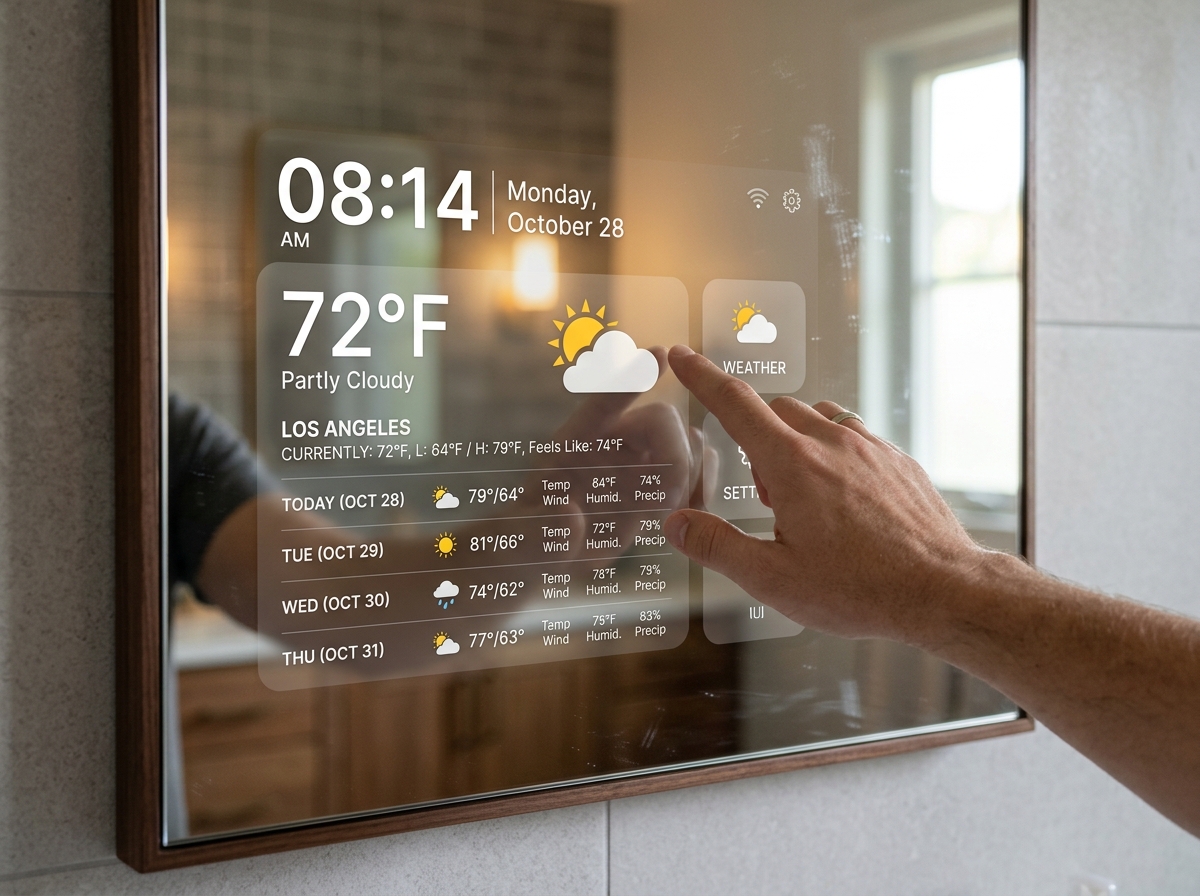
The technology has evolved rapidly. Early models were simply mirrors with LED frames, but today’s high-end versions are essentially mini-computers. They run on operating systems like Android and connect to your home network via Wi-Fi or Ethernet. This connectivity allows the mirror to pull live data—like your morning commute traffic or the day’s headlines—directly onto the glass surface.
Beyond the “brains” of the device, the physical hardware has seen massive upgrades. Modern smart mirrors often feature 5mm copper-free silver glass, which is essential for home use. Traditional mirrors can develop “black edges” over time when exposed to the humidity of a bathroom, but copper-free coatings prevent this corrosion. If you’re interested in the technical side of things, check out this Setting up your Smart Mirror: A Complete Guide for a deeper dive into the mechanics.
Essential Features of a Smart Mirror for Home
If you are browsing the 8,000+ results for smart mirrors on major retailers like Amazon, you’ll notice a few features that are considered “must-haves” for a modern home.
- Dimmable LED Lighting: Most mirrors now offer stepless dimming, allowing you to adjust brightness from 5% to 100%. This is crucial for creating the right ambiance, whether you’re applying precise makeup or taking a relaxing midnight bath.
- Color Temperature Control: High-quality mirrors allow you to switch between warm (3000K), neutral (4000K), and daylight (6000K) settings. This ensures your reflection looks the same as you will when you step outside.
- Anti-Fog Technology: This is a game-changer. Built-in defoggers use a heating pad behind the glass to keep a section of the mirror crystal clear, even after the steamiest shower.
- Bluetooth Speakers: Many models include “exciter” speakers or built-in stereo systems. You can pair your phone to listen to your “Get Ready” playlist without worrying about getting your smartphone wet.
- Memory Function: We love this feature because it remembers your preferred brightness and color settings every time you flip the switch.
For more inspiration on how these features fit into a renovation, take a look at these Bathroom Smart Mirror Ideas.
Advanced Integration and Health Monitoring
The “smart” in Smart mirror for home is getting even more intelligent. Advanced models now act as a bridge between your smart home ecosystem and your daily routine. Some mirrors feature a full Android OS, giving you access to the Google Play Store and over a million apps.
Imagine standing at your vanity and checking your sleep data from the night before or seeing your weight and body fat percentage pop up on the glass because your mirror synced with your smart scale. Brands like ORVIBO and QAIO are leading the way in integrating health devices like blood pressure meters and glucometers directly into the interface.
This level of integration makes the mirror a central hub for Smart Mirror for Smart Home Control, where you can dim the bedroom lights or check your front door camera without ever leaving the bathroom.
Popular Types of Smart Mirrors for Every Room
While the bathroom is the most common spot for a smart mirror, these devices are migrating into every corner of the house. From the bedroom to the home gym, the “interactive wall” is becoming a reality.
Choosing the Right Smart Mirror for Home Bathrooms
When selecting a mirror for the bathroom, durability is the top priority. You need to look for mirrors with high IP (Ingress Protection) ratings, which certify that the electronics are protected against moisture and splashes. High-end models often feature six layers of waterproof protection and tempered glass for safety.
Shadow-free illumination is another critical factor. Look for mirrors with a PMMA diffuser, which spreads the LED light evenly so you don’t have harsh shadows under your eyes while shaving or applying eyeliner. If you’re a fan of the “do-it-yourself” approach, you can even learn about a DIY Bathroom Smart Mirror to customize your setup.
| Feature | Bathroom Vanity Mirror | Full-Length Fitness Mirror |
|---|---|---|
| Primary Use | Grooming & Hygiene | Workouts & Dressing |
| Key Tech | Anti-fog, Dimmable LEDs | Touchscreen, Motion Sensors |
| Size Range | 20″ to 48″ | 50″ to 70″+ |
| Installation | Wall-mounted (Hardwired) | Floor-standing or Wall-mount |
| Connectivity | Bluetooth, Wi-Fi | Wi-Fi, App Store, Camera |
Entertainment and Productivity Hubs
For those who want to maximize every minute, some smart mirrors act as full-blown entertainment centers. Models like the HILO XL or the Framed Samsung 4K QLED Mirror allow you to stream Netflix, YouTube, or check your Outlook calendar.
In a kitchen setting, a smart mirror can be embedded into a cabinet door to show recipes or weather updates while you cook. In a Smart Mirror Office Setup, it can serve as a secondary display for stock tickers or news feeds, keeping your main desk clutter-free.
Buying Guide: What to Consider Before Your Purchase
Buying a Smart mirror for home is a bit more complicated than buying a standard mirror. Here is what we recommend checking before you hit “Add to Cart”:
- Size and Orientation: Measure your vanity or wall space carefully. Popular sizes range from small 20-inch circles to massive 60-inch rectangular displays. Decide if you want a horizontal or vertical mount, as some features (like the clock display) might be fixed in one orientation.
- Installation Method: Most large smart mirrors require a hardwired connection to a wall switch. If you aren’t comfortable with electrical work, you’ll need to hire a pro. Tabletop models are “plug-and-play” but offer fewer features.
- Touch vs. Voice Control: Do you want to tap the glass (and leave fingerprints) or use Google Assistant/Alexa? Some premium mirrors like the HILO Smart Mirror use diamond-coated glass to reduce fingerprints by up to 80%.
- Subscription Fees: Be careful! Some fitness-focused mirrors require a monthly subscription to access workouts. Other brands offer a “no subscription” model where you just use the apps you already own.
If you’re feeling adventurous and want to save some money, check out our Beginners Guide to Building a Smart Mirror.
Energy Efficiency and Longevity
One of the best reasons to upgrade is energy efficiency. Modern LEDs used in these mirrors are incredibly durable, often rated for 50,000 hours of life. To put that in perspective, if you use your mirror for 3 hours every single day, the lights will last for over 45 years!
To save even more power, look for mirrors with motion sensors. These will automatically turn the display and lights on when you walk into the room and shut them off when you leave. Also, ensure the product has UL or ETL certification, which means it has been tested for safety and energy standards in North American homes. For those placing a mirror in a sleeping area, consider how a Building a Bedroom Smart Mirror setup can include “night mode” features to reduce blue light.
Frequently Asked Questions about Smart Mirrors
How does a smart mirror differ from a traditional mirror?
A traditional mirror is just a piece of glass with a reflective backing. A Smart mirror for home adds a layer of technology: a two-way mirror, a digital display (like an LCD or OLED screen), and a small computer module (like a Raspberry Pi or an Android board). This allows the mirror to display data and interact with the user via touch or voice, all while maintaining a reflective surface.
Are smart mirrors safe for humid bathroom environments?
Yes, provided they are designed for it. High-quality smart mirrors feature waterproof electronics, tempered glass, and copper-free coatings. They are often rated for “damp locations” and include anti-fog systems that prevent moisture from sitting on the glass, which actually helps protect the internal components from long-term humidity damage.
Can I build my own smart mirror at home?
Absolutely! Many enthusiasts use a Raspberry Pi running the MagicMirror² software. You’ll need a monitor (with the bezel removed for a slim profile), a two-way mirror sheet (acrylic or glass), and a frame to hold it all together. It’s a fantastic project for anyone interested in Home Automation with a DIY Smart Mirror.
Conclusion
At Foco Finanças, we believe that home automation should make your life easier, not more complicated. The Smart mirror for home is a perfect example of this philosophy. It takes an object you already use every day—the mirror—and gives it superpowers. Whether you want to streamline your morning routine, stay on top of your fitness goals, or just listen to your favorite tunes while you brush your teeth, there is a smart mirror out there for you.
From the DIY enthusiast building a custom rig with a DIY Smart mirror kit to the luxury buyer looking for a fully integrated 4K display, the options are endless. If you’re ready to start your own project, follow our DIY Smart Mirror: A Step-by-Step Guide or Explore more smart home hardware to see how else you can upgrade your living space.
The future of the home is interactive, and it starts with the reflection in your mirror!
