
Understanding the Automatic Defogger Mirror Setup
At its core, an automatic defogger mirror setup is a marvel of simple thermodynamics. When you take a hot shower, the air in your bathroom becomes saturated with water vapor. When that warm, moist air hits the cool surface of your mirror, it loses energy and transforms back into liquid water—this is the “fog” that ruins your reflection.
A mirror defogger interrupts this process by using an ultra-thin heating pad. These pads, often no thicker than a credit card, are adhered to the back of the mirror. When switched on, they transmit gentle heat through the glass. By raising the temperature of the mirror surface just a few degrees above the “dew point,” the water vapor stays in its gaseous state. No condensation, no streaks, and no waiting around.
While the concept is consistent, the application varies between environments:
- Bathroom Applications: These typically involve a 120V or 240V heating mat connected to the room’s electrical system. They are designed for fixed, wall-mounted mirrors.
- Automotive Applications: These are usually 12V or 24V systems integrated into side mirrors or rearview mirrors. They often include moisture sensing or temperature-dependent activation to clear frost and fog automatically.
When planning your setup, it is vital to consider the Essential Materials for Your Smart Mirror. Beyond the heating pad itself, you’ll need proper insulation and moisture-resistant adhesives.
One of the biggest concerns homeowners have is energy consumption. You might worry that keeping a mirror warm is a “drain” on the wallet. In reality, mirror defoggers are incredibly efficient. Most use about the same amount of electricity as a standard light bulb. Because they are typically wired to turn off when the light or the car is off, the operating costs are negligible—often just pennies per day.
How to Install a Bathroom Mirror Defogger
Installing a bathroom mirror defogger is a rewarding weekend project that significantly boosts your home’s “luxury” feel. Before you start peeling back adhesives, you need a strategy.

Sizing and Placement Strategy
The first rule of a successful automatic defogger mirror setup is proper sizing. You want a heating pad that is slightly smaller than the mirror itself. This ensures the pad remains completely concealed behind the glass. We recommend leaving about a 1-to-2-inch border of “unheated” glass around the edges.
For placement, think about where you actually look. If you have a massive wall-to-wall mirror, you don’t necessarily need to heat the entire thing. For large mirrors, we suggest positioning the top edge of the defogger approximately 6’6″ above the floor. For smaller vanity mirrors, simply center the pad over the sink area where you’ll be standing.
Technical Requirements
Most high-quality defoggers come with a self-adhesive backing and a “cold lead”—a power cord (usually around 36 inches long) that connects the pad to your home’s electricity.
While the physical act of sticking the pad to the mirror is a great DIY Bathroom Smart Mirror project, the electrical side requires caution. You will need to install a 2” x 3” remodeler’s electrical junction box behind the mirror.
Safety Note: All wiring must comply with the National Electrical Code (NEC). Because bathrooms are “damp environments,” we strongly recommend consulting a licensed electrician to handle the final connections to ensure everything is grounded and safe.
Step-by-Step Automatic Defogger Mirror Setup
- Mirror Preparation: Lay your mirror face down on a soft, protected surface (like a towel or rug). Clean the back of the mirror thoroughly with isopropyl alcohol. Any dust or oils will prevent the adhesive from bonding permanently.
- Marking the Territory: Use a marker to outline exactly where the pad will sit on the back of the glass.
- The “Peel and Smooth” Method: Do not rip the entire backing off at once! Peel back about 2 inches of the protective paper. Align it with your marks and press it down. Gradually pull the rest of the paper away with one hand while using the other to smooth the pad onto the glass. This prevents air bubbles, which can cause “cold spots.”
- Wiring Integration: Most users prefer to wire the defogger into the bathroom’s vanity light circuit. This creates a truly automatic defogger mirror setup—the mirror starts warming the second you flip the light switch to start your morning routine.
- Mounting: When hanging the mirror, ensure there is a slight gap (about 1/8 inch) between the heating pad and the wall. This prevents the wall from “stealing” the heat, ensuring all that energy goes into the glass.
- Testing: Turn on the power. Within 3 to 5 minutes, the glass should feel slightly warm to the touch.
For a deeper dive into the technical nuances, check out Setting Up Your Smart Mirror: A Complete Guide.
Safety Restrictions and Best Practices
While we love a good DIY project, safety is paramount.
- Fixed Surfaces Only: Mirror defoggers are designed for stationary, wall-mounted mirrors. Never install them on a medicine cabinet door. The constant swinging of the door can fatigue the wires, leading to a fire hazard.
- No “Wet Zones”: These pads are safe for damp bathrooms, but they are not waterproof. Do not install them inside a shower enclosure or a sauna.
- No Overlapping: If you have a very large mirror and use multiple pads, ensure they do not overlap. Overlapping creates excessive heat that can crack the glass or damage the silvering.
- Do Not Cut: Unlike some heat tapes, mirror defogger pads cannot be trimmed to size. Cutting the pad will break the internal electrical circuit, rendering it useless (and potentially dangerous).
If you are worried about heat buildup in a confined space, read A Comprehensive Guide on a Smart Mirror Cooling System to understand how to manage temperatures effectively.
Automotive Auto-Dimming and Defogging Systems
The automatic defogger mirror setup isn’t just for the bathroom; it’s a critical safety feature for your vehicle. Automotive systems often combine defogging (heating) with auto-dimming (glare reduction).
Modern vehicles use sophisticated sensors to manage visibility. An auto-dimming mirror typically features two photocell sensors: one facing forward to sense ambient light and one facing backward to detect glare from trailing headlights. When glare is detected, the mirror applies a low-voltage charge to an electrochromic gel layer, darkening the glass.
For those looking to upgrade their trucks or cars, following Gentex Auto Dimming Mirror Installation Instructions is the industry standard. These installations often involve:
- Ignition-Switched Power: Ensuring the mirror only draws power when the engine is running.
- Temperature Probes: Many aftermarket kits, like a 2004 F250 Auto Dimming Mirror Install, include an external temperature probe. This probe is usually mounted in the front grille to provide accurate outside temperature readings to your mirror’s display.
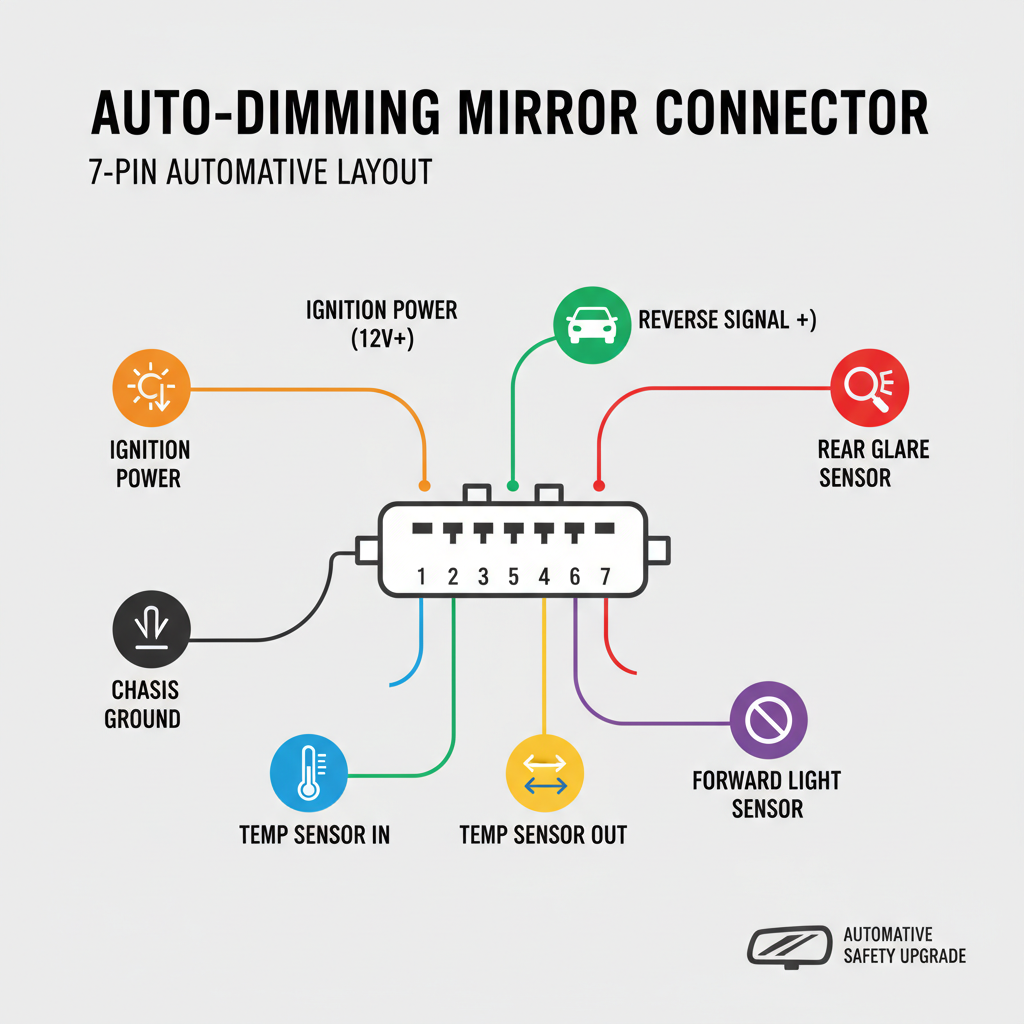
Advanced Controls for an Automatic Defogger Mirror Setup
In high-end automotive setups, the mirrors aren’t just “on” or “off.” They use modules like ThermaSync to manage power. These systems can include automatic shut-off timers—typically 10 to 30 minutes—to prevent battery drain.
For example, a Honda CR-V Mirror Installation Guide reveals that many modern systems are temperature-sensitive. If the outside air is below 32°F (0°C), the defogger might stay on indefinitely to prevent ice buildup, whereas in milder weather, it will cycle off once the glass is clear.
Performance and Maintenance Tips
How well does an automatic defogger mirror setup actually perform? In a bathroom, you can expect a clear patch to appear exactly where the pad is located within 3 to 5 minutes.
| Feature | Bathroom Heating Pad | Automotive Integrated System |
|---|---|---|
| Activation Time | 3-5 Minutes | 2-10 Minutes (Temp dependent) |
| Power Source | 120V/240V AC | 12V/24V DC |
| Control Method | Light Switch / Manual Timer | Thermostat / BCM / Manual Button |
| Maintenance | None (Set and forget) | Sensor cleaning / Fuse checks |
Troubleshooting and Longevity
Mirror defoggers are generally “set and forget” devices with no moving parts, meaning they can last for decades. However, if you notice “cold spots,” it usually indicates an air bubble was trapped during installation.
In vehicles, if the mirror stops heating, the first place to check is the fuse. Because these systems pull significant amperage (up to 25 amps in some truck applications), a blown fuse is the most common culprit. For rear window defoggers that are integrated with the mirrors, you can even buy “grid filament repair” kits to fix small breaks in the conductive lines.
If you’re looking for more inspiration on how to integrate these into a modern home, explore these Bathroom Smart Mirror Ideas.
Frequently Asked Questions about Mirror Defoggers
Can I install a defogger on any mirror shape?
Yes! While rectangular pads are the most common, manufacturers offer custom sizes in oval and round shapes. As long as the mirror is wall-mounted and stationary, you can find a pad to fit. Just remember to choose a pad that leaves at least an inch of clearance from the mirror’s edge to ensure the adhesive stays hidden.
Do mirror defoggers use a lot of electricity?
Not at all. A typical bathroom mirror defogger uses about 15-20 watts per square foot. To put that in perspective, it’s roughly the same energy consumption as a single LED or small incandescent light bulb. Since it’s only running while you’re in the bathroom, the cost is virtually unnoticeable on your monthly bill.
Can I wire the defogger to my bathroom light switch?
This is actually the most recommended setup! By wiring the defogger in parallel with your vanity lights, the mirror begins warming up the moment you enter the room. By the time you’ve finished your shower, the mirror is already at the perfect temperature to prevent fogging. It’s the ultimate “automatic” convenience.
Conclusion
At Foco Finanças, we believe that smart home upgrades should be both functional and accessible. An automatic defogger mirror setup is one of those rare home improvements that offers a high return on “daily happiness” for a very low investment.
By following the safety standards and installation steps outlined in this guide, you can ensure a crystal-clear reflection every single morning—no more wiping, no more streaks, and no more waiting. Whether you are tackling a DIY bathroom project or upgrading your vehicle’s visibility, a fog-free life is just a heating pad away.
Start your mirror project today and transform your morning routine from frustrating to flawless.
